





Informing Federal Standards to Reduce Carbon Pollution
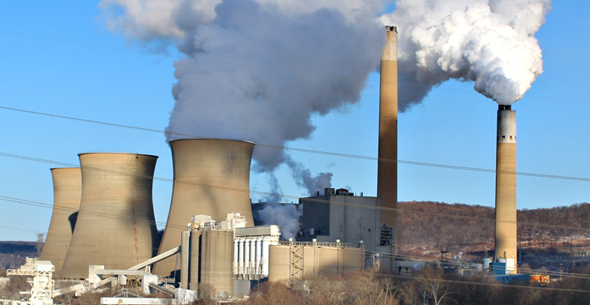
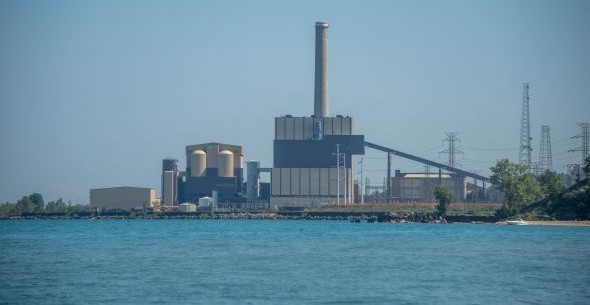
Georgetown Climate Center conducts legal and policy analysis, facilitates dialogues between federal and state agency leaders, and convenes states and stakeholders to inform the development of federal standards to reduce carbon pollution from the power sector. In December 2022, GCC submitted comments to the U.S. Environmental Protection Agency (EPA) on behalf of the Northeast and Mid-Atlantic Power Sector Policy Forum that expressed support for “strong standards of performance for existing coal-, oil- and natural gas-fired power plants” in order to significantly reduce greenhouse gas emissions from the electricity sector.
Convening States and Stakeholders
Georgetown Climate Center convenes states and other stakeholders to discuss opportunities for state leadership on climate and clean energy. The facilitation of regional and multi-state forums, including through the Conveners Network and the States Deployment Initiative, informs the development and implementation of federal policies and programs and serves as a resource for states. GCC’s Northeast and Mid-Atlantic Power Sector Policy Forum brings together state energy, environment, and utility regulatory agency officials in 11 states to support the transition to cleaner energy in the region.
Georgetown Climate Center also facilitates engagement by subnational leaders, including governors and state agency leaders, in international climate policy development.
Adaptation Clearinghouse: Energy Sector
An online database and networking site that serves policymakers and others who are working to help communities adapt to climate change. This page includes resources to help policymakers understand, plan, and prepare for impacts of climate change to the energy sector, ranging from changes in energy demand to preparing for threats to energy infrastructure.
Reducing Emissions from the Health Care Sector
With support from the Commonwealth Fund, the Georgetown Climate Center is reviewing federal and state energy policies that could help health care delivery organizations meet ambitious greenhouse gas reduction targets. This includes policies to reduce fossil-fuel use at health care facilities and shift to clean electricity, reduce transportation emissions from health care–related vehicles and fleets, increase resilience from extreme weather events and provide cleaner air for communities near health care delivery facilities, and drive reductions in supply chain emissions.
Report | Rebates or Planning Grants?
June 5, 2025
Memo: Opportunities for Climate-Related State Investments
December 20, 2021
This memorandum provides an overview of funding available to states in the Infrastructure Investments and Jobs Act, and potentially available in the Build Back Better Act, for climate-related investments along with key considerations for states that wish to take full advantage of this historic opportunity.
Written Statement of Vicki Arroyo before the U.S. House of Representatives Committee on Transportation and Infrastructure, February 26, 2019
February 28, 2019
On Tuesday, February 26, 2019, GCC Executive Director Vicki Arroyo testified before the full House Committee on Transportation and Infrastructure at a hearing entitled "Examining How Federal Infrastructure Policy Could Help Mitigate and Adapt to Climate Change." Arroyo provided spoken and written testimony to the Committee, and fielded questions along with the other panelists.
Agency Leaders For 14 States Oppose Trump Administration's Clean Power Plan Replacement
August 21, 2018
Leaders of environment and energy agencies for 14 states issued a unified statement opposing the Trump Administration’s proposal to replace the Clean Power Plan with a framework that fails to reduce carbon pollution from power plants and puts their citizens at risk from the dangerous impacts of climate change. The statement to EPA Acting Administrator Andrew Wheeler was facilitated by Georgetown Climate Center.
Reducing Transportation Emissions in the Northeast and Mid-Atlantic: Fuel System Considerations
July 23, 2018
In support of states interested in learning more about market-based policy options, the Georgetown Climate Center developed Reducing Transportation Emissions in the Northeast and Mid-Atlantic: Fuel System Considerations to explore technical aspects of a possible regional cap-and-invest policy, as an illustrative example of a market-based approach to a multi-state transportation policy. The paper focuses on two subjects: which fuels might be covered under a policy, and which entities in the transportation fuel supply chain might be responsible for reducing emissions. First published November 12, 2017. Updated July 2018 to include new data and analysis.
More States Advocate for Strong GHG Regulations under the Clean Air Act
February 27, 2018
In addition to the letter facilitated by Georgetown Climate Center, state and city leaders also submitted these letters commenting on the ANPRM.
12 States Encourage EPA to Implement a Meaningful Federal Program to Reduce GHG Emissions
February 27, 2018
12 Governors Sign Letter Urging President Trump to Stay in the Paris Climate Agreement
May 3, 2017
Following climate marches by hundreds of thousands of Americans over the weekend, 12 U.S. governors are urging President Trump to remain in the Paris Climate Agreement and keep the United States' commitment to reduce greenhouse gas emissions 26-28 percent below 2005 levels by 2025.
Governors from California, Colorado, Connecticut, Delaware, Hawaii, Minnesota, New York, Oregon, Pennsylvania, Rhode Island, Virginia, and Washington signed onto the letter, which was sent to the White House this morning. The Georgetown Climate Center worked with states to facilitate this letter.
Blog | Appeals Court Overturns DOE’s Efforts to Keep Aging Coal Plant from Retiring
September 17, 2026
Ruling says DOE can use Federal Power Act 202(c) orders only as an emergency backstop during time-limited events like storms On Friday, September 11, 2026, a federal appeals court overturned an order from the U.S....
Issue Brief | Building Local Governance Structures for Evaluating Data Center Proposals
September 3, 2026
Five steps local governments can take to prepare for decisions about data centers Local governments across the country are responding to the prospect of data center development, as well as growing public concerns about...
Issue Brief | What to Make of Data Center Moratoriums?
August 12, 2026
A framework for identifying three different types of data center moratoriums at the local and state levels. State and local governments have been proposing – and in many cases enacting – moratoriums on data center...
GCC Resources on Data Centers & Large Electric Load Growth
August 12, 2026
*NEW* Issue Brief | Building Local Governance Structures for Evaluating Data Center Proposals (September 3, 2026) Issue Brief | What to Make of Data Center Moratoriums? (August 12, 2026) Issue Brief | State...
This explainer is part of GCC’s efforts to help state officials and stakeholders understand how recent federal actions may affect state policies and programs related to clean energy, climate change, and climate...
Issue Brief | State Utility Tariffs: A Tool to Manage Large Load Growth
March 20, 2026
Demand for electricity is rising rapidly due to the growth of data centers and other new large electric customers, as GCC recently highlighted in an introductory blog on large loads. In a new issue brief released today,...
Statement on the US EPA's Reversal of the Endangerment Finding for Greenhouse Gases
February 12, 2026
“EPA’s reversal of the Endangerment Finding undermines decades of progress to address the existential threat of climate change,” said Kate Zyla, Georgetown Climate Center’s Executive Director. “The Agency’s...
Understanding Recent Federal Actions | Offshore Wind Development
February 5, 2026
GCC Explainer | Key Trump Administration Actions to Restrict Offshore Wind Development This explainer is part of GCC’s efforts to help state officials and stakeholders understand how recent federal actions may affect...
Blog | EPA’s Proposed Endangerment Finding Revocation Purports to Limit Both Federal and State Climate Authority
September 10, 2025
By Amanda Lineberry, Senior Associate On August 1, 2025, the U.S. Environmental Protection Agency (EPA) proposed to rescind the cornerstone 2009 Endangerment Finding that enables EPA to regulate greenhouse gases (GHGs)...
Understanding Recent Federal Actions | "Energy Emergency" Declaration and State Energy Policies
July 1, 2025
This explainer is part of GCC’s efforts to help state officials and stakeholders understand how recent federal actions may affect state policies and programs related to energy and climate change. Our goal is for this...