

Improving the emissions performance of our transportation system
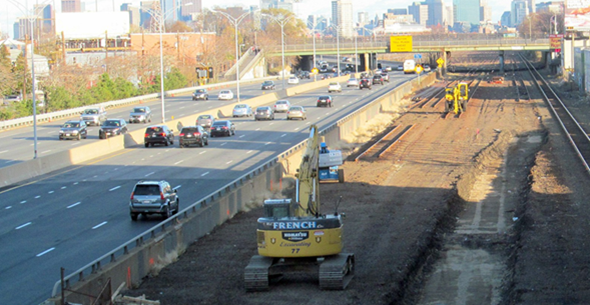
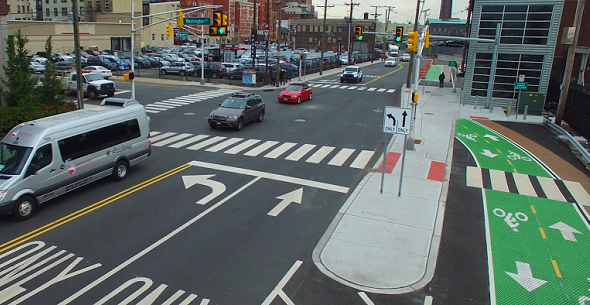
Transportation is the largest source of GHG emissions in the US, accounting for 27% of annual emissions in 2020. GCC works at the nexus of federal-state transportation policy to help inform government initiatives that leverage a broad range of strategies to reduce emissions, including light-duty and heavy-duty vehicle electrification, improved transit, and other lower-carbon, more accessible, and safer transportation options. GCC convenes multi-state and regional policymakers, supports federal and state regulatory policy development, and informs the equitable and effective implementation of state and federal legislation. GCC also supports state and federal efforts to ensure transportation investments benefit communities that have been disproportionately harmed by transportation pollution and underserved by the existing transportation system.
Informing transportation investment decisions
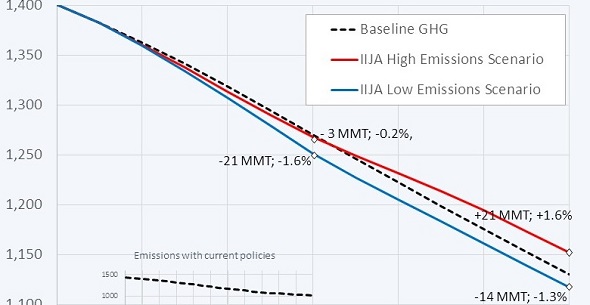
Modeling and Analysis: To inform the national conversation around how best to spend the billions of dollars in federal and state transportation funding, we analyzed the Bipartisan Infrastructure Law using our Transportation Investment Strategy Tool and assessed the potential effects of each of the bill’s surface transportation provisions on emissions outcomes at the national and state levels. We found IIJA could be an important part of the U.S. response to climate change. Or it could lead to more greenhouse gas pollution than the trajectory we are currently on. Where the actual outcome falls within that range will depend on the decisions made by state, federal, and local governments about how to spend the money made available by IIJA.
We partnered with Cambridge Systematics to develop a free online tool – the Transportation Evaluation and Carbon Reduction Tool (TEA-CART) – to help practitioners in state and local departments of transportation quickly assess how investments in their capital plans could affect the future emissions performance of the transportation system.
Legal analysis on flexibility of funding: States have considerable flexibility in how to invest federal transportation funds, and we are providing legal and policy analysis to help state and federal policymakers and stakeholders determine how funds can best be directed toward projects that reduce climate-warming pollution.
Accelerating vehicle electrification
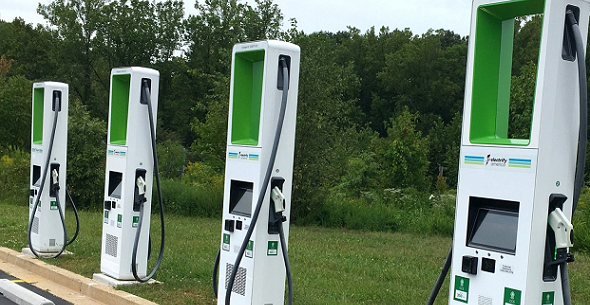
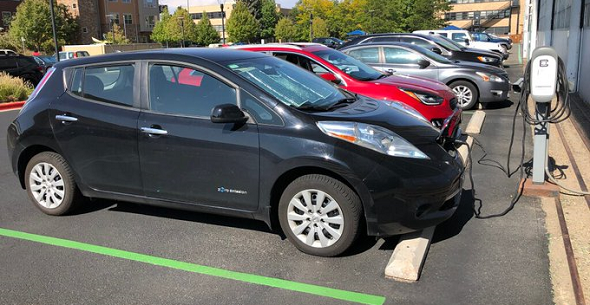
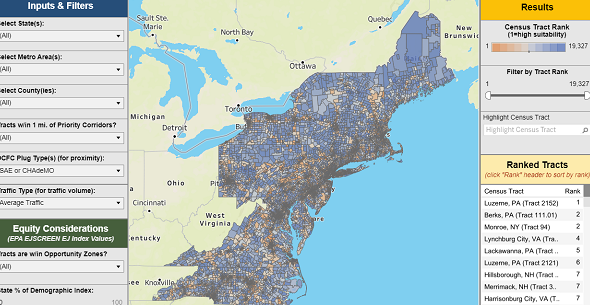
Electric vehicles (EVs) have enormous potential to reduce harmful air pollution and greenhouse gas (GHG) emissions from transportation. GCC has developed legal and policy analysis to inform state and federal investments in EV charging infrastructure, along with mapping and analysis tools to inform discussions between policymakers, local communities, and other stakeholders in considering priority locations for EV fast charging infrastructure investments, including the places most affected by pollution and underserved by existing transportation systems.
Convening states to focus on the GHG performance of federal highways
GCC conducts analysis and convenes states and other stakeholders from across the nation to support the development of federal transportation programs and regulations, with a focus on the performance of the federal highway system. GCC works to inform federal policy with the perspectives and lessons learned from states, including by publishing white papers and policy analyses and facilitating multi-state comment letters.
Expanding community-level air quality monitoring
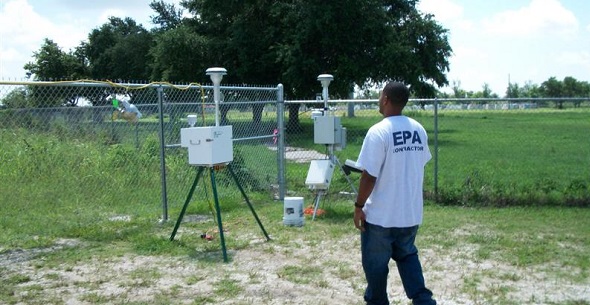
Community and environmental justice advocates have long called for more air quality monitoring in their neighborhoods, and a growing number of political leaders at the federal, state, and local levels of government are now taking responsive actions. To help state agencies respond to community needs, expand community-level air monitoring programs, and achieve the equity and environmental justice goals of their air quality, climate, and clean energy programs, GCC facilitates the Air Quality Monitoring Workgroup (AQMWG). This community of practice among state agency officials in the Northeast and Mid-Atlantic region shares information and best practices regarding community-based air quality monitoring and related policy actions.
Facilitating Northeast and Mid-Atlantic state collaboration
GCC serves as the facilitator and convenor of state transportation, energy, and environment agencies from the Northeast and Mid-Atlantic region working to develop low-carbon transportation policies. This work includes multi-state efforts to consider GHG emissions in transportation investment planning processes, coordinate and support regional electric vehicle (EV) charging infrastructure deployment, build state and local capacity for air quality monitoring, and develop regional low-carbon transportation policies.
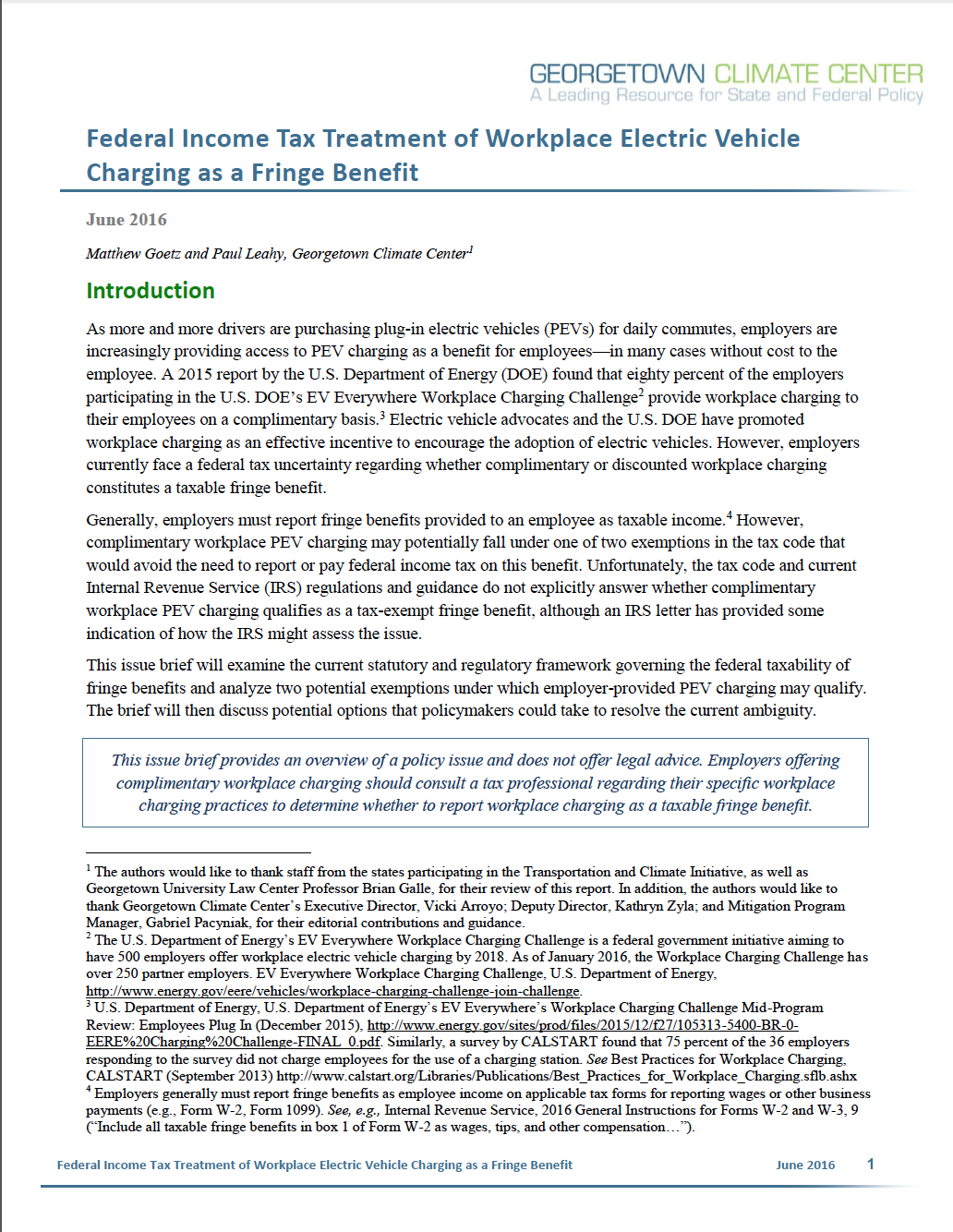
Federal Income Tax Treatment of Workplace Electric Vehicle Charging as a Fringe Benefit
June 30, 2016
The Georgetown Climate Center has released an issue brief that analyzes the federal income tax treatment of workplace electric vehicle charging as a fringe benefit. The issue brief examines the current statutory and regulatory framework governing the tax treatment of fringe benefits and describes actions that policymakers could take to provide clarity to employers who provide complimentary workplace charging to their workforces.
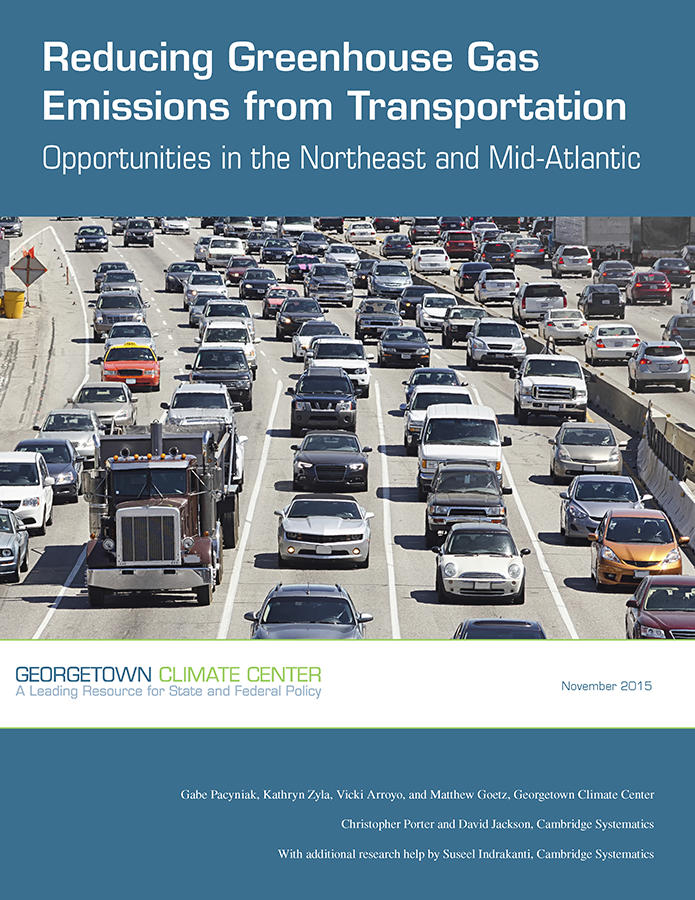
Reducing Greenhouse Gas Emissions from Transportation: Opportunities in the Northeast and Mid-Atlantic
November 24, 2015
Reducing Greenhouse Gas Emissions from Transportation: Opportunities in the Northeast and Mid-Atlantic analyzes the potential for greenhouse gas (GHG) reductions from the transportation sector and the resulting benefits, costs, and macroeconomic impacts for the 11 states and the District of Columbia that participate in the Transportation and Climate Initiative.
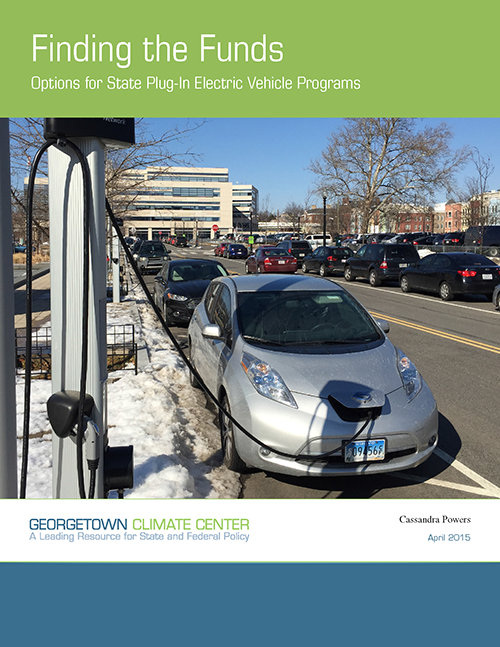
Finding the Funds: Options for State Plug-In Electric Vehicle Programs
April 17, 2015
This paper identifies options for states to fund plug-in electric vehicle (PEV) programs and highlights ways that states across the U.S. are supporting PEVs.
Supporting the Plug-In Electric Vehicle Market: Best Practices from State PEV Programs
January 15, 2015
This paper captures best practices in state-sponsored plug-in electric vehicle (PEV) buyer incentive programs, DC fast charging programs, and PEV awareness initiatives, as presented at the Transportation and Climate Initiative’s 2014 Plug-In Electric Vehicle Workshop.
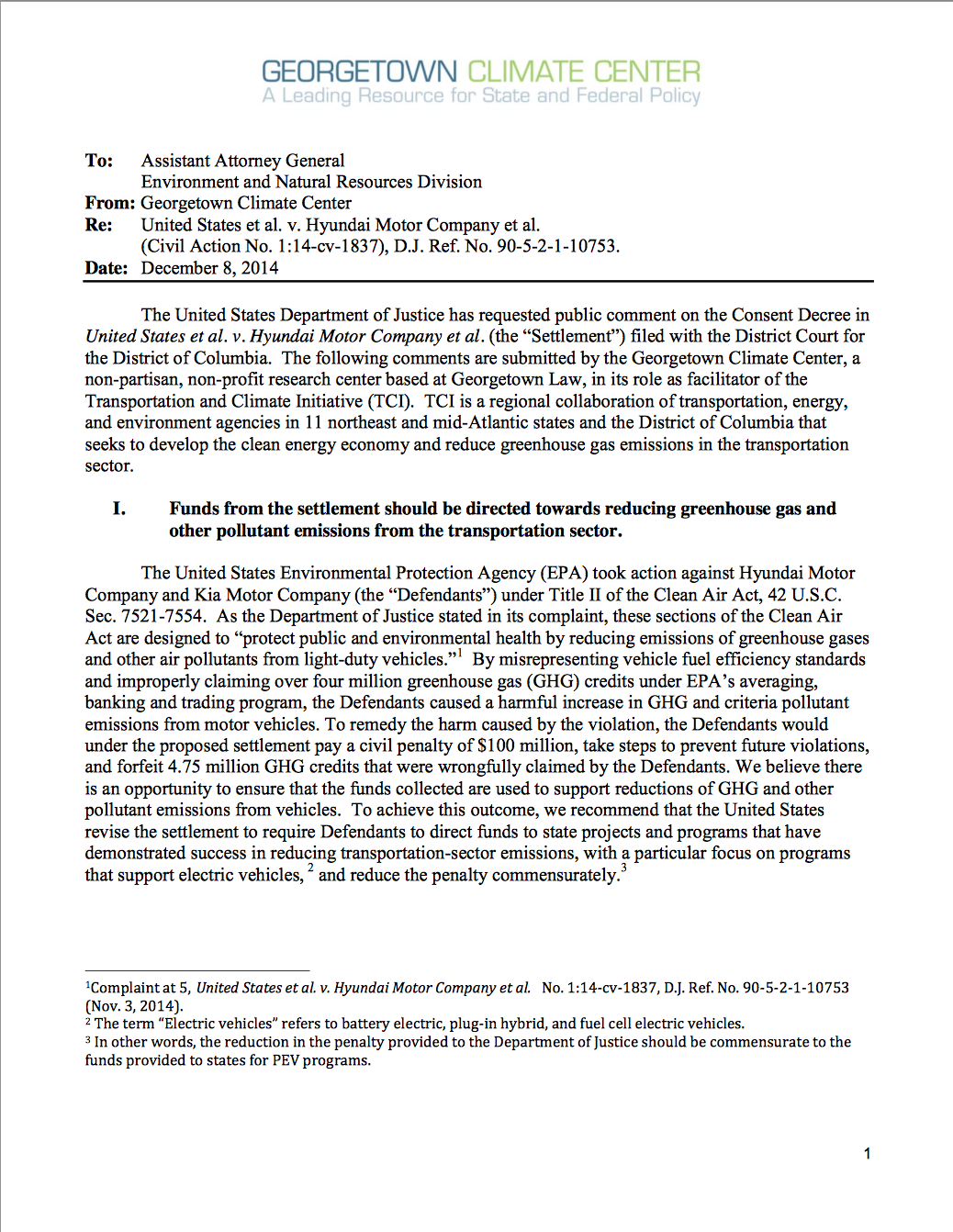
Comments on United States v. Hyundai Proposed Consent Decree
December 11, 2014
The Georgetown Climate Center, in its role as facilitator of the Transportation and Climate Initiative, has recommended that the U.S. Justice Department revise its proposed consent decree in United States et al. v. Hyundai Motor Company et al. to require the defendants to direct funds to state projects and programs that have demonstrated success in reducing transportation-sector emissions.
Charging Ahead – Options for Policymakers Regarding the Regulation of Electric Vehicle Charging Markets
June 17, 2014
This paper provides an overview of the market for electric vehicle charging services, identifies actors and actions that might warrant regulation, and poses questions for policymakers to consider in determining the role that governments should play.
Lessons from Early Deployments of Electric Vehicle Charging Stations
June 5, 2014
The goals of this study are to document real cases of electric vehicle charging infrastructure installations in the Northeast and Mid-Atlantic regions and uncover some of the related challenges and opportunities. Unlike earlier electric vehicle documents produced by the Transportation and Climate Initiative, the focus of this study is not on how installations should be done but rather on how they have been done.
Sustainable Communities Indicators Research Paper Series: Travel Mode Share
June 5, 2014
In support of the Transportation and Climate Initiative’s Sustainable Communities’ work, the Georgetown Climate Center and Rutgers University's Bloustein School of Planning and Public Policy released research papers examining 11 potential indicators that could help measure progress in promoting sustainable communities and demonstrate the benefits of such policies. As one of the papers in that series, this paper examines the various approaches for measuring travel mode share.
In support of the Transportation and Climate Initiative’s Sustainable Communities’ work, the Georgetown Climate Center and Rutgers University's Bloustein School of Planning and Public Policy released research papers examining 11 potential indicators that could help measure progress in promoting sustainable communities and demonstrate the benefits of such policies. As one of the papers in that series, this paper explores the health impacts of transportation, the feasibility of measuring health outcomes directly and offers recommendations for using a health benefits indicator.
Sustainable Communities Indicators Research Paper Series: Greenhouse Gas Emissions Indicators and Approaches
June 5, 2014
In support of the Transportation and Climate Initiative’s Sustainable Communities’ work, the Georgetown Climate Center and Rutgers University's Bloustein School of Planning and Public Policy released research papers examining 11 potential indicators that could help measure progress in promoting sustainable communities and demonstrate the benefits of such policies. As one of the papers in that series, this paper explores ways that states can measure greenhouse gas emissions from transportation and related indicators, such as vehicle miles traveled.
National Electric Vehicle Infrastructure Program Equity Dashboard
July 22, 2024
The National Electric Vehicle Infrastructure Program Equity Dashboard summarizes elements related to the Justice40 Initiative (Justice40 or J40) in the National Electric Vehicle Infrastructure (NEVI) Program plans...
Summary for Policymakers | Unlocking Equitable Access to Grants
May 9, 2024
Options for Federal Policymakers to Improve Matching Fund Requirements This is a Summary for Policymakers of a longer report released by GCC. Read the full report here. As federal policymakers award grant funds to...
As federal policymakers award grant funds to implement climate, clean energy, transportation, and other programs, they have opportunities to remove barriers to the equitable distribution of federal resources. Non-federal...
Blog | Celebrating Climate Planning on Earth Day: A Look at Priority Climate Action Plans Across the U.S.
April 22, 2024
By Grace Gibson, GCC Climate Fellow As we recognize the 55th Earth Day this year, consider a notable milestone in the U.S.: climate planning is happening in all 50 states. While many states have over a decade of...
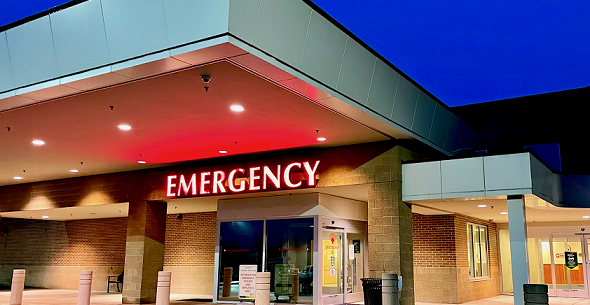
Report: Low-Carbon Transportation Policies Can Reduce Health Care Emissions and Benefit Local Communities
February 8, 2024
Hospitals, clinics, and other facilities that serve patients – also known as healthcare delivery organizations (or HDOs) – are pivotal players in the fight against climate change. They care for individuals impacted...
BLOG | Signs of Progress: US DOT enables EV charging station logo signs along highways
February 2, 2024
Recent action by the federal government to allow businesses with electric vehicle (EV) charging stations to appear on highway logo signs is a chance to create a better driving experience for EV drivers. It could also help boost the EV transition and ease range anxiety by increasing visibility of EV charging stations, but realizing these benefits will require action by state DOTs.
BLOG | A growing number of states are taking steps to align transportation planning decisions with climate targets
January 10, 2024
New state transportation planning requirements are important tools for reducing climate pollution State governments play key roles when it comes to setting the pace for reducing greenhouse gas (GHG) emissions from...
Fourteen States & D.C. Express Support for Final Rule on Measuring GHG Emissions from Highway System
January 4, 2024
On January 4, 2024, fourteen states and the District of Columbia wrote to the Administrator of the Federal Highway Administration (FHWA) to thank the agency for adopting the [date] final rule for Assessing Performance of the National Highway System, Greenhouse Gas Emissions Measure.
State transportation officials and Georgetown Climate Center welcome final rule on tracking GHG pollution from federal highways
November 22, 2023
The Georgetown Climate Center and officials from states leading on clean transportation today welcomed a newly finalized rule from the U.S. Department of Transportation that will provide a nationally consistent framework...
Issue Brief | How Community-Based Air Quality Monitoring Can Make Climate Policy More Equitable
June 1, 2023
By James Bradbury & Emma Cross Community tour of an air quality monitoring station. (Image from Mecklenburg County) The passage of the federal Inflation Reduction Act[ref...
- « First Page
- 1
- 2
- 3
- 4
- 5
- 6
- 7
- 8
- Last Page »