

Improving the emissions performance of our transportation system
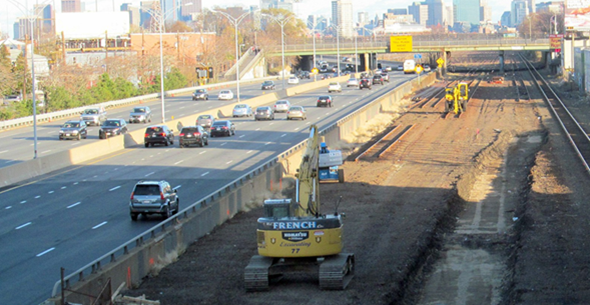
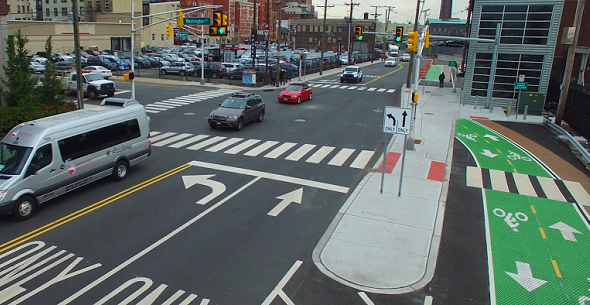
Transportation is the largest source of GHG emissions in the US, accounting for 27% of annual emissions in 2020. GCC works at the nexus of federal-state transportation policy to help inform government initiatives that leverage a broad range of strategies to reduce emissions, including light-duty and heavy-duty vehicle electrification, improved transit, and other lower-carbon, more accessible, and safer transportation options. GCC convenes multi-state and regional policymakers, supports federal and state regulatory policy development, and informs the equitable and effective implementation of state and federal legislation. GCC also supports state and federal efforts to ensure transportation investments benefit communities that have been disproportionately harmed by transportation pollution and underserved by the existing transportation system.
Informing transportation investment decisions
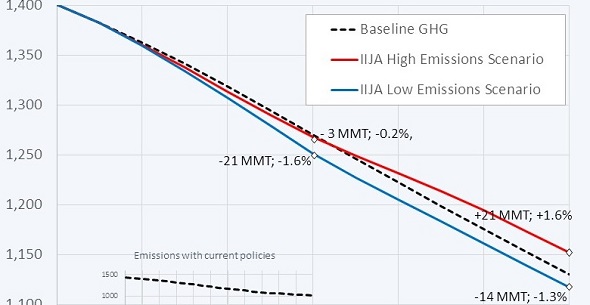
Modeling and Analysis: To inform the national conversation around how best to spend the billions of dollars in federal and state transportation funding, we analyzed the Bipartisan Infrastructure Law using our Transportation Investment Strategy Tool and assessed the potential effects of each of the bill’s surface transportation provisions on emissions outcomes at the national and state levels. We found IIJA could be an important part of the U.S. response to climate change. Or it could lead to more greenhouse gas pollution than the trajectory we are currently on. Where the actual outcome falls within that range will depend on the decisions made by state, federal, and local governments about how to spend the money made available by IIJA.
We partnered with Cambridge Systematics to develop a free online tool – the Transportation Evaluation and Carbon Reduction Tool (TEA-CART) – to help practitioners in state and local departments of transportation quickly assess how investments in their capital plans could affect the future emissions performance of the transportation system.
Legal analysis on flexibility of funding: States have considerable flexibility in how to invest federal transportation funds, and we are providing legal and policy analysis to help state and federal policymakers and stakeholders determine how funds can best be directed toward projects that reduce climate-warming pollution.
Accelerating vehicle electrification
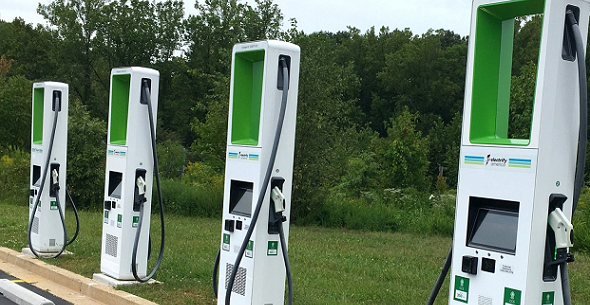
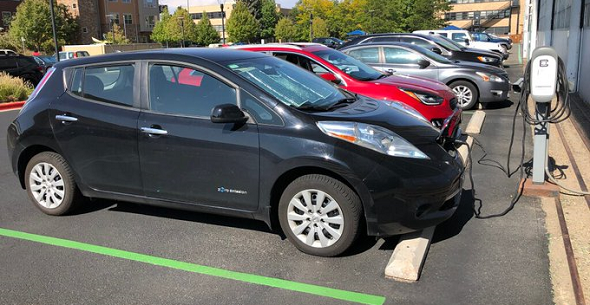
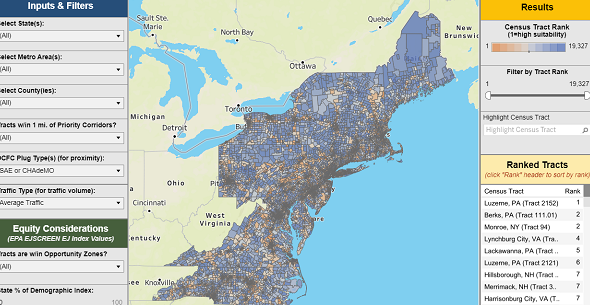
Electric vehicles (EVs) have enormous potential to reduce harmful air pollution and greenhouse gas (GHG) emissions from transportation. GCC has developed legal and policy analysis to inform state and federal investments in EV charging infrastructure, along with mapping and analysis tools to inform discussions between policymakers, local communities, and other stakeholders in considering priority locations for EV fast charging infrastructure investments, including the places most affected by pollution and underserved by existing transportation systems.
Convening states to focus on the GHG performance of federal highways
GCC conducts analysis and convenes states and other stakeholders from across the nation to support the development of federal transportation programs and regulations, with a focus on the performance of the federal highway system. GCC works to inform federal policy with the perspectives and lessons learned from states, including by publishing white papers and policy analyses and facilitating multi-state comment letters.
Expanding community-level air quality monitoring
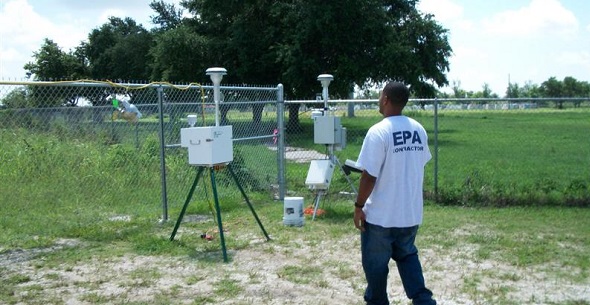
Community and environmental justice advocates have long called for more air quality monitoring in their neighborhoods, and a growing number of political leaders at the federal, state, and local levels of government are now taking responsive actions. To help state agencies respond to community needs, expand community-level air monitoring programs, and achieve the equity and environmental justice goals of their air quality, climate, and clean energy programs, GCC facilitates the Air Quality Monitoring Workgroup (AQMWG). This community of practice among state agency officials in the Northeast and Mid-Atlantic region shares information and best practices regarding community-based air quality monitoring and related policy actions.
Facilitating Northeast and Mid-Atlantic state collaboration
GCC serves as the facilitator and convenor of state transportation, energy, and environment agencies from the Northeast and Mid-Atlantic region working to develop low-carbon transportation policies. This work includes multi-state efforts to consider GHG emissions in transportation investment planning processes, coordinate and support regional electric vehicle (EV) charging infrastructure deployment, build state and local capacity for air quality monitoring, and develop regional low-carbon transportation policies.
Summary of the Federal District Court’s Order Enjoining California’s Low Carbon Fuel Standard
January 19, 2012
On December 29, 2012, the United States District Court for the Eastern District of California granted partial summary judgment to the plaintiffs in Rocky Mountain Farmers Union v. Goldstene, holding that California’s Low Carbon Fuel Standard (LCFS) violated the dormant Commerce Clause of the United States Constitution. The court also granted the plaintiffs a preliminary injunction, prohibiting enforcement of the LCFS until the litigation is completed.
Agreement to Form the Northeast Electric Vehicle Network
October 19, 2011
Ten northeast states and the District of Columbia announced the formation of the Northeast Electric Vehicle Network on October 19, 2011 to expedite the deployment of electric vehicles in the region and promote the use of alternative fuels. The Network seeks to bolster economic growth, maintain the region’s leadership in the clean energy economy and reduce the area’s dependence on oil and its emissions of greenhouse gases and other pollutants.
TCI Sustainable Communities Agreement
June 8, 2011
Transportation, environment and energy agency heads from 12 Northeast and Mid-Atlantic jurisdictions released an Agreement to Support Sustainable Communities on June 8.
TCI Work Plan 2010
November 4, 2010
Agency heads from the 12 jurisdictions that make up the Transportation and Climate Initiative approved the group’s first work plan in October.
Overview of RGGI for TCI Participants
November 3, 2010
This overview of RGGI was part of the briefing document given to participating states at the kickoff of the Transportation and Climate Initiative in June 2010.
Summary of Policy Options in State Climate Action Plans
November 3, 2010
This document provides a summary of policy options in state climate action plans. Prepared by the Transportation Climate Initiative for participating states at its kickoff event in June 2010.
Summary of Climate Change Provisions in State Long-Range Transportation Plans
November 3, 2010
This overview provides a summary of climate change provisions in state long-range transportation plans. The document was prepared by the Transportation and Climate Initiative for participating states at its June 2010 kickoff.
TCI Declaration of Intent
June 16, 2010
Eleven U.S. states and the District of Columbia announced signed the Declaration of Intent to create the Transportation and Climate Initiative (TCI) – a new regional transportation approach that will help states build the clean energy economy of the future.
Linking Regional Cap-and-Trade Programs: Issues and Recommendations
April 29, 2010
The Georgetown Climate Center has released a report exploring the potential to link the cap-and-trade programs of the Western Climate Initiative, the Midwest Greenhouse Gas Reduction Accord, and the Regional Greenhouse Gas Initiative.
State Roles in Reducing Greenhouse Gas Emissions from Transportation
March 17, 2010
This paper reviews state roles in transportation policy as it relates to climate change and identifies potential areas of overlap between state and federal authorities and potential areas of conflict.
Incoming Transportation Research Board Chair Vicki Arroyo leads discussion on resilience, sustainability, and path forward
October 10, 2018
At the 2018 Transportation Resilience Innovations Summit and Exchange (RISE) conference in Denver, Colorado, Vicki Arroyo led a conversation with stakeholders on ways the organization can integrate resilience and sustainability into their research and external outreach.
Transportation and Climate Initiative Welcomes the Commonwealth of Virginia
September 12, 2018
Virginia joins regional coalition of states working for low-carbon transportation solutions
Georgetown Climate Center Partners on Two Transportation Panels at 2018 Global Climate Action Summit
September 7, 2018
In conjunction with the Global Climate Action Summit in San Francisco, Georgetown Climate Center is partnering with UC Davis Policy Institute for Energy, Environment, and the Economy and others on two events highlighting regional collaboration and the future of low-carbon transportation. The Center's Executive Director Vicki Arroyo will moderate a panel at each session.
GCC Asks USEPA, NHTSA for More Public Hearings, Comment Extension for Vehicle Emissions Rollbacks
September 6, 2018
On September 6, 2018, shortly after USEPA and NHTSA proposed a joint rule to roll-back vehicle emissions and fuel efficiency standards and to rescind the CA waiver, GCC’s Executive Director, Vicki Arroyo, submitted to...
U.S. EPA and NHTSA Propose to Freeze GHG Emissions and Fuel Economy Standards for Cars and Trucks
August 2, 2018
On August 2, 2018, the U.S. Environmental Protection Agency and National Highway Traffic Safety Administration issued a joint Notice of Proposed Rulemaking on greenhouse gas emission and fuel economy (CAFE) standards for vehicle model years 2021 to 2026. The Administration’s proposed rule would freeze the standards at 2020 levels for model years 2021-2026. The rule also would revoke the waiver granted to California to establish more stringent standards for vehicle emissions, as well as the Zero Emission Vehicle (ZEV) Regulation.
EV Corridor Analysis Tool for Northeast and Mid-Atlantic States
July 26, 2018
The Georgetown Climate Center and M.J. Bradley & Associates developed an electric vehicle (EV) corridor analysis tool to support state and regional EV charging infrastructure planning. Developed in collaboration the Northeast and Mid-Atlantic states through the Transportation and Climate Initiative, the corridor analysis includes an interactive online map of public fast charging infrastructure for electric vehicles along selected corridors across the region and uses various criteria to identify highway exits that are good candidates for additional charging infrastructure investment.
U.S. EPA to Revise GHG Emissions Standards for Model Year 2022-2025 Cars and Light Trucks
April 2, 2018
On April 2, 2018, U.S. Environmental Protection Agency Administrator Scott Pruitt announced that EPA has completed its Midterm Evaluation process for the existing federal greenhouse gas emissions standards for cars and light trucks for model years 2022-2025, and determined that the standards "are not appropriate and should be revised."
State and Local Climate Leadership in the Trumpocene
October 18, 2017
In a special issue of the Carbon & Climate Law Review, Vicki Arroyo identifies steps that states and cities are taking that demonstrate their climate leadership in the face of the Trump Administration's assault on climate change policy.
States and Stakeholders Envision a Cleaner Transportation Future and the Means to Achieve It
September 21, 2017
The Georgetown Climate Center hosted a symposium of business leaders, transportation experts, health care advocates, equity and environmental NGOs, and others in New York this week to give participants the opportunity to share their vision of a cleaner transportation future with state officials. Senior officials from 15 states and Washington, DC, participated in the event.
Low-Carbon Transportation Symposium
April 13, 2017
The Georgetown Climate Center held a symposium on low-carbon transportation strategies for state officials and policy experts on April 4, 2017. The symposium focused on what a cleaner, more resilient, and more equitable transportation system could look like, and participants discussed important trends, challenges, and opportunities for achieving such a future.
- « First Page
- 1
- 2
- 3
- 4
- 5
- 6
- 7
- 8
- Last Page »