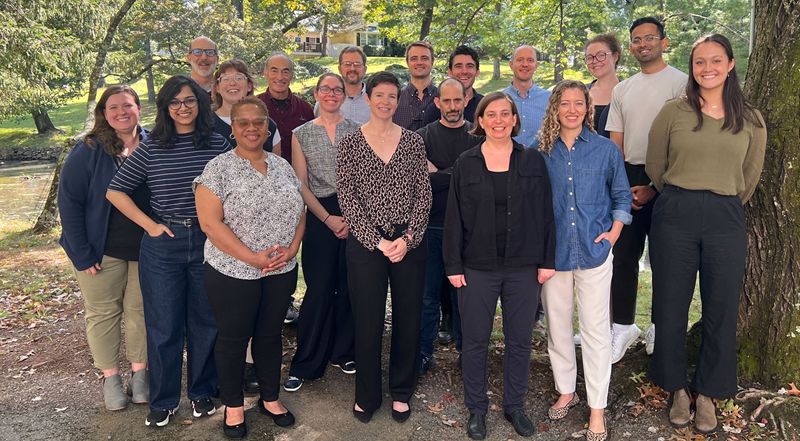
About Us
The mission of the Georgetown Climate Center is to advance ambitious and equitable government responses to the climate crisis in the U.S. at the national, state, and local levels.
In the United States, responding to the climate crisis depends on effective partnerships among federal, state, and local governments. When different levels of government collaborate and communicate with each other when they are developing climate and energy policies, they can go farther and faster in achieving durable, equitable, ambitious climate action for the health and welfare of the people across the country.
The Georgetown Climate Center (GCC) was established in 2009 at the request of state leaders who recognized the need to strengthen connections between climate policies and policymakers at all levels of government and to help policymakers develop aligned strategies that work together to address climate change.
We aim to help good ideas make their way into laws and regulations, so we focus on helping federal, state, and local leaders with the messy and complicated business of practical, real world policymaking. GCC serves as a resource to state, federal, and local policymakers who are working to develop policies to reduce greenhouse gas pollution and become more resilient to the effects of climate change, providing legal, policy, and process support to inform policy development.
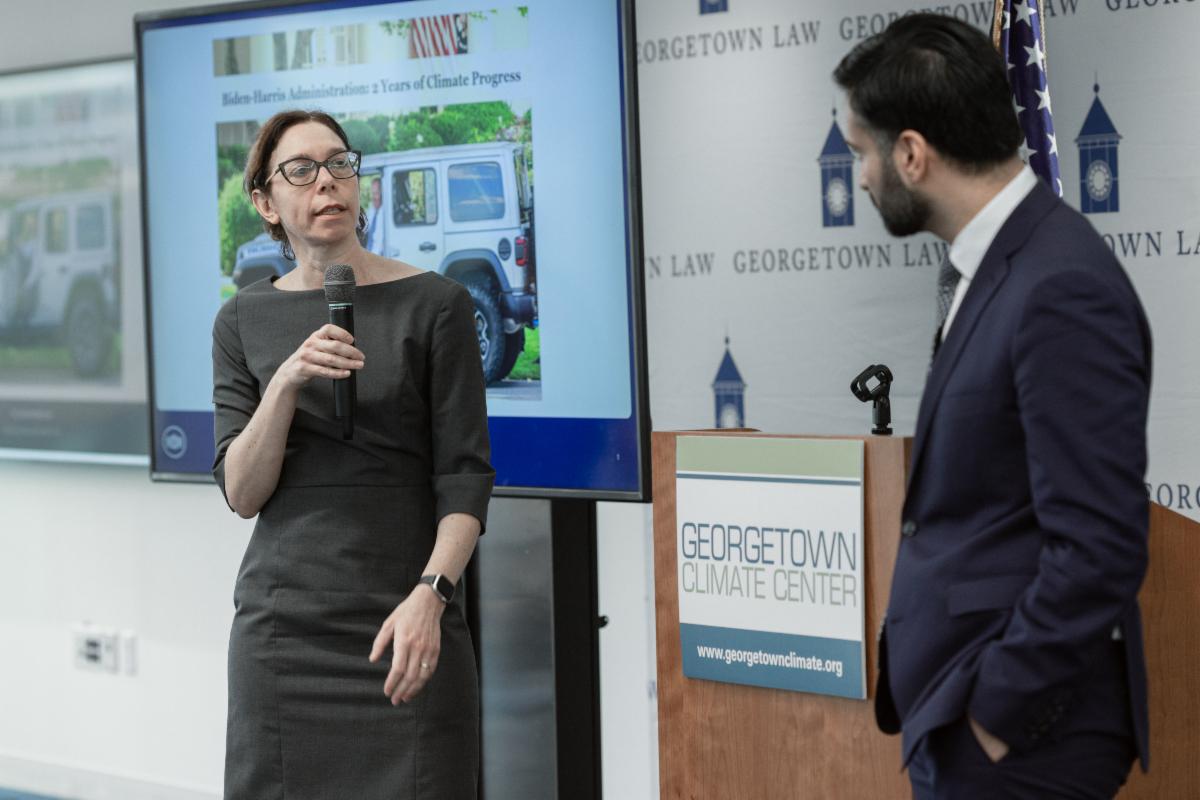
GCC Executive Director Kate Zyla moderating a discussion with White House National Climate Advisor Ali Zaidi at an event hosted by GCC.
We apply our expertise to both sides of the climate policy equation:
- Mitigation: Reducing the carbon pollution that causes climate change from power generation, transportation, and other sources; and
- Adaptation: Adapting to and becoming more resilient to the effects of climate change, including rising sea levels and flooding, extreme heat, and severe weather events.
We work to break down barriers to communication and facilitate ambition, innovation, and collaboration between different levels of government, different jurisdictions at the same level of government; and multiple agencies within individual jurisdictions. Some of the tools we use to accomplish our goals include:
- Convening focused policy discussions that make it more likely that good ideas become good climate policy.
- Informing policy conversations with trusted, independent, relevant research, analysis, and modeling.
- Building the capacity of policymakers to design robust, equitable, and inclusive policies, and processes that incorporate stakeholder input and help good ideas become real.
A proud part of the Georgetown University Law Center
Part of Georgetown University Law Center, GCC also harnesses the deep expertise and strong reputation of Georgetown University and networks of academic colleagues, to connect academic research and thought leadership with on-the-ground policymaking. Our unique connection to Georgetown provides opportunities for students to contribute to policy and legal analysis of cutting-edge climate and clean energy issues.