

BLOG | A growing number of states are taking steps to align transportation planning decisions with climate targets
January 10, 2024 | by Ryan Levandowski
New state transportation planning requirements are important tools for reducing climate pollution
State governments play key roles when it comes to setting the pace for reducing greenhouse gas (GHG) emissions from transportation — the largest source of climate pollution in the U.S. The investment decisions made at state and local levels directly affect levels of pollution from transportation, and those decisions will be an important factor determining the emissions outcomes of federal transportation policy. Investments in low-carbon transportation options, like public transit, electric vehicles, bike lanes, and pedestrian infrastructure, can accelerate progress toward meeting state and federal climate goals. On the other hand, spending transportation dollars on projects that expand roadway capacity tends to lead to additional driving, known as “induced travel,” which makes it more difficult to meet those critical goals.
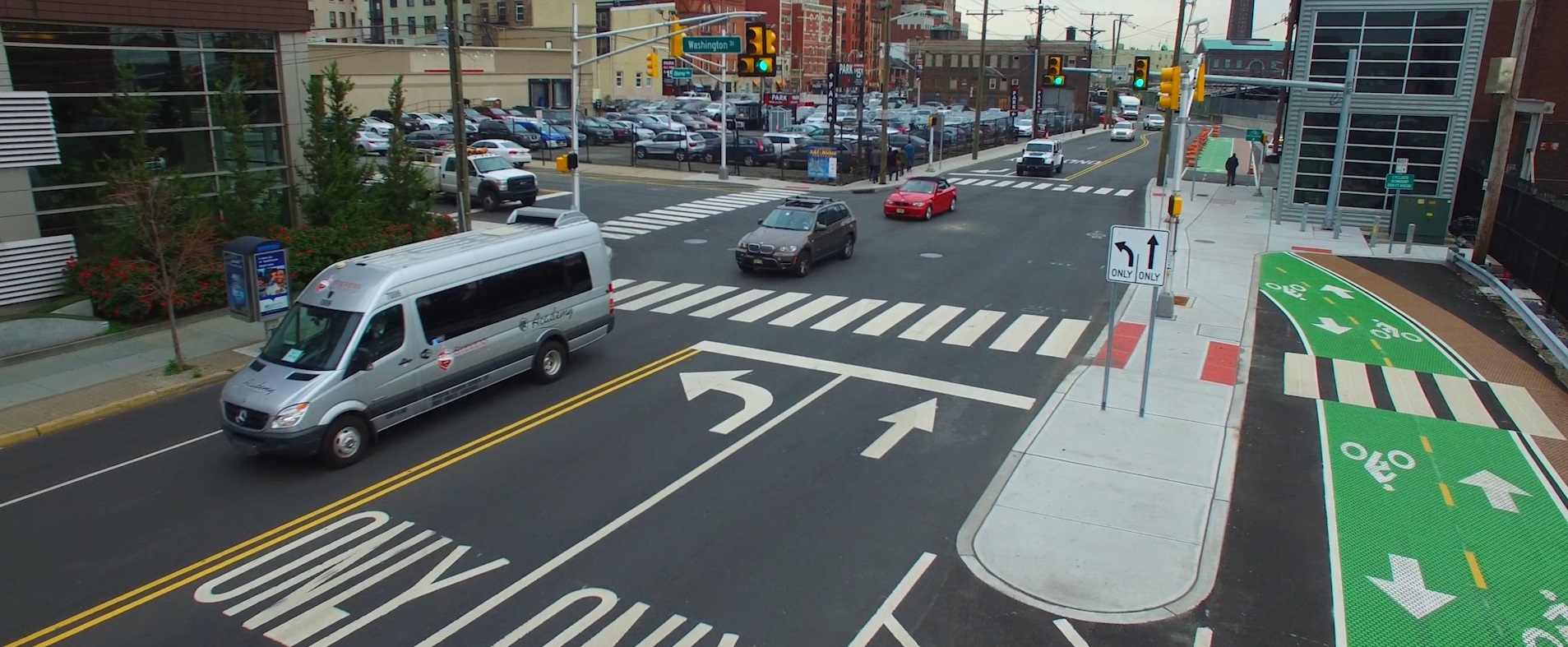
Given the long-lasting nature of our transportation infrastructure, planners and decision makers across levels of government increasingly recognize the importance of aligning transportation decisions with beneficial climate outcomes. At the federal level, the U.S. Department of Transportation’s Federal Highway Administration (FHWA) recently finalized a GHG performance rule, under which state departments of transportation (DOTs) and metropolitan planning organizations (MPOs) will soon begin to measure and set targets for reducing the climate-warming pollution from vehicles traveling on national highways. The heads of the DOTs from 14 states and the District of Columbia recently voiced support for the FHWA’s final rule and a growing number have adopted their own innovative policies to better align transportation and climate plans.
Actions at the state level to better account for the vehicle miles traveled (VMT) and GHG emissions impacts of planned transportation projects can help states plan for and achieve more ambitious climate targets, including transportation emissions reductions beyond what are expected from improvements to vehicle efficiency and electrification alone. Examples of such planning policies are already in place in California, Colorado, and Oregon — while Minnesota and Connecticut both adopted similar planning requirements in 2023. These early examples offer a set of models that can inform policy development in other states looking to tackle transportation GHG emissions.
Background: State Transportation Planning
Many of the most important decisions about transportation investments are made during statewide and metropolitan transportation planning processes that are largely guided by federal laws.See footnote 1 In order to take advantage of federal highway funding, states must regularly develop both long- and short-range transportation plans. Federal rules further require that states design their transportation plans to achieve certain performance-based goals related to national highways and transit, including targets for safety, air quality, and infrastructure conditions. When achieving those requirements, states and MPOs have significant flexibility to prioritize projects that also advance their own policy goals, including the imperative to achieve climate pollution reduction targets.
Transportation planning is generally overseen by state DOTs, but the process of developing and updating plans also involves balancing the roles and responsibilities of federal, tribal, regional, and local entities, including MPOs, transit agencies, and municipal and county governments. During this process, DOTs and planning partners identify and scope new projects based on a variety of factors, such as availability of funding, transportation system needs, and policy priorities established by governors and state legislatures.
By its very nature, transportation planning is generally conducted years in advance of project start dates; long-range transportation plans typically cover a period of twenty years, while short-range plans are required to be updated and approved by FHWA every four years. That means many transportation projects being built today may have been planned a decade or more in the past, with little or no consideration for greenhouse gas impacts. This disconnect presents a challenge for rapidly decarbonizing transportation at the pace needed to meet GHG emissions reduction goals and avoid the worst effects of climate change. As a result, there is an urgent need to align plans being prepared today with the ambitious climate goals that the federal government and many states have committed to achieve over the coming decades.
Transportation Planning and Climate Goals
Although twenty-five states and the District of Columbia have established statutory or executive targets to reduce economy-wide GHG emissions, relatively few have taken steps to directly account for the impacts of transportation projects on their progress toward meeting these goals. In 2018, a national survey of state DOTs found that only six state agencies reported having a policy that sets goals or targets for reducing transportation GHG emissions. At that time, roughly the same number of states reported engaging in quantitative consideration of GHG impacts during transportation planning, programming, or project development.
Over the past few years, more and more states have recognized the need to connect transportation decision making with GHG reduction targets, and some have adopted new policies to account for the induced travel and GHG emissions impacts of transportation projects. Below are some examples of states that have demonstrated leadership by implementing policies to align transportation planning and project evaluation with their statewide GHG targets. Importantly, for all of these policies, emissions reductions from transportation planning requirements are generally accounted for separately from certain “baseline” reductions, which can be expected to result from improved vehicle efficiency and electric vehicle adoption.
California
In 2020, California adopted new California Environmental Quality Act (CEQA) guidelines under SB 743 (2013) that are designed to better align transportation project analysis with state climate goals. The updated guidelines establish VMT as the primary measure of transportation impacts, replacing previous measures that focused on traffic congestion and automobile delay. Under the new guidelines, if proposed transportation projects are expected to significantly increase VMT — as a result of expanded highway capacity, for instance — then California agencies must consider actions to mitigate the additional driving and, consequently, the GHG pollution it produces.
The CEQA guidelines also direct California agencies to consider whether proposed projects are consistent with relevant state and local plans, including regional transportation plans and plans to reduce GHG emissions. Importantly, this means that projects must be analyzed for consistency with the climate goals established in the state’s Scoping Plan, which identifies actions needed in order to achieve California’s goals to reduce GHG emissions 40 percent below 1990 levels by 2030See footnote 2 and 85 percent below 1990 levels by 2045.See footnote 3 Capacity expansion projects with the potential to significantly increase VMT are likely to be inconsistent with VMT targets established in the Scoping Plan, which call for a per capita VMT reduction of at least 25 percent below 2019 levels by 2030 and 30 percent below 2019 levels by 2045.
Colorado
In Colorado, SB 21-260 (2021) directs Colorado DOT and MPOs to engage in an enhanced level of planning to account for the impacts of any planned capacity expansion projects on statewide GHG emissions and VMT. Under that law, Colorado’s Transportation Commission adopted a first-of-its-kind GHG Pollution Reduction Planning Standard, which requires the state’s DOT and MPOs to develop plans that will ensure proposed transportation projects meet specified GHG pollution reduction levels and help to achieve statewide GHG goals. If a plan exceeds the maximum allowed GHG pollution level, based on regionally allocated GHG emissions limits that are consistent with achieving statewide goals, then the planning agency may opt to comply by implementing one or more “mitigation measures”—additional projects that reduce GHG emissions and improve access to equitable transportation options. If mitigation measures are insufficient to meet GHG reduction levels, then planning agencies may be required to direct additional funding streams toward mitigation efforts.
Oregon
Since 2020, Oregon has worked to amend land use and transportation planning rules in response to Governor Kate Brown’s executive order directing state agencies to take actions to meet the state’s goals of reducing GHG emissions at least 45 percent below 1990 levels by 2035 and 80 percent below 1990 levels by 2050.See footnote 4 Among other things, new rules implementing the Climate Friendly and Equitable Communities program require the state’s metropolitan areas and local governments to update their comprehensive land use and transportation plans to meet the state’s climate pollution reduction targets. Under Oregon’s coordinated land use and transportation planning system, state agencies, including Oregon DOT, are responsible for providing guidance and technical assistance to help local and regional entities identify priority investments that are consistent with statewide planning goals.
Minnesota and Connecticut are the latest states to adopt GHG planning rules for transportation.
In May of 2023, Minnesota passed HF 2887, which includes GHG planning requirements — similar to those in Colorado — to limit increases to GHG emissions from proposed transportation capacity expansions. Once the law takes effect in February 2025, Minnesota DOT and MPOs must ensure that any capacity expansion project proposed for inclusion in the Statewide Transportation Improvement Program (STIP) or a metropolitan transportation improvement plan is consistent with statewide GHG and VMT reduction targets. Capacity expansions projects that exceed those targets must be redesigned or accompanied by sufficient “impact mitigation” to offset the increased GHG emissions. Mitigation measures may be drawn from a variety of emissions-reducing projects or operational improvements but must be localized within the region of the capacity expansion, with priority given to directly impacted and historically disadvantaged communities.
Minnesota’s law requires the DOT to establish and allocate GHG emissions performance targets for transportation that are consistent with the state’s goal to reduce GHG emissions from all sources at least 15 percent below 2005 levels by 2015, 30 percent below 2005 levels by 2025, and 80 percent below 2005 levels by 2050.See footnote 5 Minnesota DOT must also convene a working group to assist with the development of a press to assess GHG impacts of capacity expansion projects and options to mitigate GHG impacts.
Last June, Connecticut passed SB 904, which includes a provision requiring the state’s DOT, in consultation with the Department of Energy and Environmental Protection, to establish and periodically update a carbon dioxide reduction target that sets the maximum allowable carbon dioxide emissions from the transportation sector. When setting the target, which must be in place by 2030, Connecticut DOT is required to consider the state’s long-term goals, previously established by law, to reduce GHG emissions from all sectors at least 45 percent below 2001 levels by 2030 and 80 percent below 2001 levels by 2050.See footnote 6
The new law further requires Connecticut DOT to develop and implement a plan to ensure that transportation projects included in the STIP do not exceed the maximum amount of emissions allowed under the carbon dioxide reduction target. The plan must establish a methodology for calculating the expected carbon dioxide emissions from projects and provide descriptions of projects that will mitigate carbon dioxide emissions, like public transportation improvements, construction of biking and walking pathways, and installation of electric vehicle charging stations.
Looking forward
Although many states already anticipate GHG emissions reductions from improvements to vehicle efficiency and electrification as a result of various federal and state policy levers, planning-level requirements can provide an additional tool to achieve even deeper reductions and ensure that statewide and metropolitan transportation decisions are consistent with beneficial climate outcomes.
Planning requirements may also help states to align their transportation decisions with new federal programs and directives. For example, states will soon be required to track and set declining targets for vehicle GHG emissions along national highways under FHWA’s GHG emissions performance measure. State DOTs also recently submitted Carbon Reduction Strategies to FHWA under the Carbon Reduction Program.See footnote 7 Ensuring clear accounting for the GHG emissions impacts of transportation projects may be critical to maintaining consistency across state and federal climate plans.
The details of state planning requirements may continue to vary state-by-state, based on individual state priorities and legal authorities. Most examples of transportation GHG planning requirements have been established and implemented under specific authorizing legislation, and state legislatures will likely continue to be key drivers of policy action. In states where new legislative authority may not be required, executive action may be the driving force behind new policies. In some cases, state DOTs and planning partners may examine their existing authorities to identify opportunities to incorporate GHG accounting and target-setting into their planning activities.
Although existing state planning requirements can serve as models, there may be room for other states to experiment with policy design elements to suit their own needs. Future GCC research will take a more detailed look at these and other policies to help identify viable approaches for state and local governments to better align transportation planning with ambitious state and federal climate pollution reduction goals.
Endnotes:
1
1. Federal requirements for statewide and metropolitan transportation planning can be found under 23 U.S.C. Chapter 1, Federal-Aid Highways, and 49 U.S.C. Chapter 53, Public Transportation. Back to contentBack to content
2
2. Statewide requirement established under Cal. Health & Safety Code § 38566 (2016) Back to contentBack to content
3
3. Statewide requirement established under Cal. Health & Safety Code § 38562.2(c)(2) (2022) Back to contentBack to content
4
4. Statewide requirement established under Or. Rev. Stat. § 468A.205(1)(c) (2007) Back to contentBack to content
5
5. Statewide requirement established under Minn. Stat. § 216H.02, subdivision 1 (2022) Back to contentBack to content
6
6. Statewide requirement established under Conn. Gen. Stats. § 22a-200a (2012) Back to contentBack to content
7
7. Examples of Carbon Reduction Strategies from View Source">Maryland, View Source">Vermont, and View Source">Washington | Back to contentBack to content