

Adaptation Policy in Practice | Arizona Extreme Heat Preparedness Plan: Mobilizing Government to Protect People and Communities
August 19, 2026
by Joshua Saks
Fourth Installment in GCC’s Adaptation Policy In Practice Series
Extreme heat is the deadliest weather-related hazard in the United States. Heat also disrupts the lives of millions of Americans, touching nearly every aspect of communities and the economy. During the summer of 2023, Arizona recorded 990 heat related deaths, sparking public outcry even in a state that has historically reported some of the highest temperatures in the nation. In response, Arizona adopted a comprehensive extreme heat preparedness plan in March 2024. The plan established a governance architecture focused on reducing heat-related mortality and improving quality of life for Arizonans.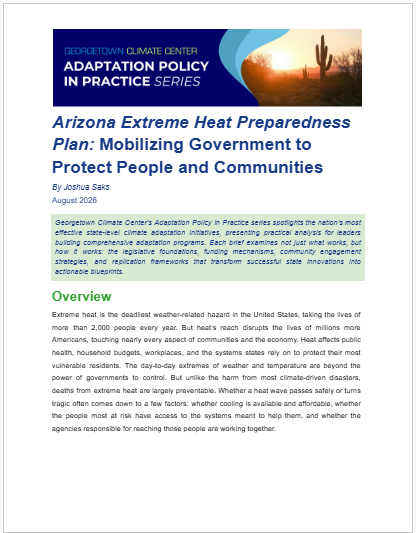
In the fourth installment in the Adaptation Policy in Practice series, Georgetown Climate Center Adaptation Program Director Joshua Saks outlines how Arizona’s plan addresses the risks from extreme heat and builds up a governance structure that can provide a foundation for other states similarly grappling with heat. Arizona created the nation's first Chief Heat Officer, built a statewide interagency coordination network, expanded cooling center infrastructure, layered in home energy assistance programs, and targeted interventions for the most vulnerable populations.
“What Arizona has shown is that the coordination itself, the office, the network, the data, can be built quickly and can outlast the crisis that prompted it,” said Saks. “As more states face the same threat, Arizona offers a working example of what that first step can look like.”
Georgetown Climate Center's Adaptation Policy in Practice series spotlights the nation’s most effective state-level climate adaptation initiatives. Each brief examines not just what works, but how it works: the legislative foundations, funding mechanisms, community engagement strategies, and replication frameworks that transform successful state innovations into actionable blueprints. Future installments will highlight state programs that model effective governance structures for climate adaptation.
Read the full issue brief here.
Explore more examples of state adaptation leadership from GCC.