

Report | GCC identifies key considerations for establishing a State Chief Resilience Officer
February 3, 2025
As the human and financial toll of the climate crisis continues to climb, a growing number of jurisdictions are establishing a new role – the Chief Resilience Officer (CRO) – to lead pre-disaster planning and risk reduction efforts to build resilience to climate-fueled hazards.
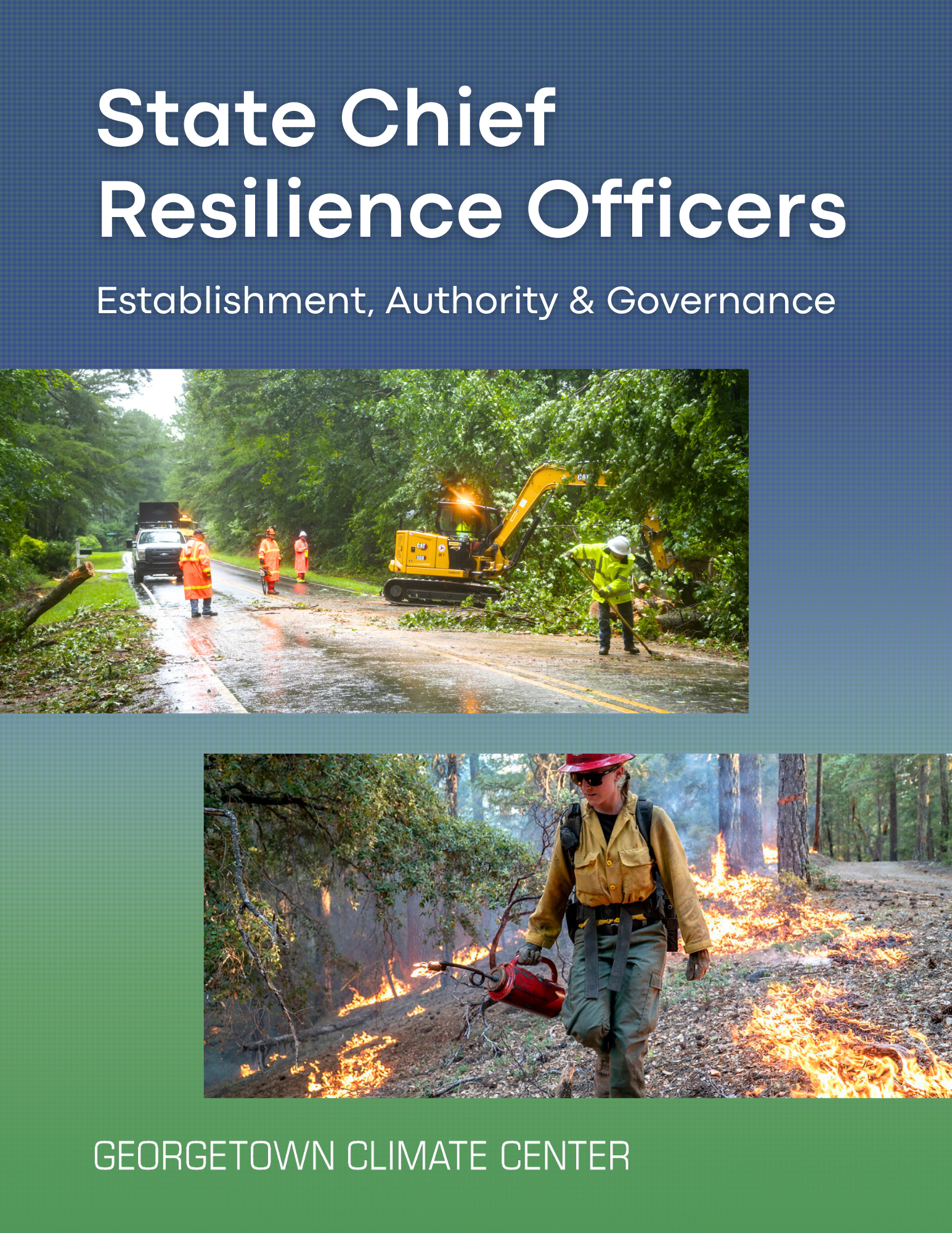 Released by the Georgetown Climate Center, State Chief Resilience Officers: Establishment, Authority & Governance explores the position and functioning of Chief Resilience Officers across 12 states and provides recommendations for states considering creating a CRO position.
A Chief Resilience Officer is typically responsible for coordinating climate resilience efforts across state agencies and jurisdictions, developing comprehensive resilience strategies, and ensuring that state investments and policies mitigate climate-related risks for as many people as possible. Unlike traditional emergency management roles, CROs focus primarily on pre-disaster planning and long-term resilience building rather than on the immediate response after a disaster occurs.
The report examines how CROs operate in state governments, finding that organizational placement shapes their reach and role. These roles are generally positioned in one of three locations: governors' offices, environmental/natural resource agencies, and emergency management departments. Each placement carries distinct advantages for accessing resources and coordinating resilience efforts. The report analyzes how these different structures affect a CRO's ability to reduce climate risks and protect communities, before moving to recommendations for effective implementation.
The new GCC analysis details elements that can affect a CRO’s reach and capabilities, and lays out key considerations for state governments interested in building this position to prepare for the impacts of climate-driven hazards. It highlights both the benefits of the CRO position and the specific strategies that can impact its ability to accomplish its goals.
"Ideally, a CRO should be established in a senior leadership position that has sufficient staff and resources, with the authority to work across agencies and levels of government," says GCC Adaptation Director and report author Joshua Saks. "Establishing a CRO and empowering the role with the tools they need can create an invaluable center-point for state resilience initiatives that protect people and communities from the increasing climate-driven hazards."