

Models for Starting Pilots
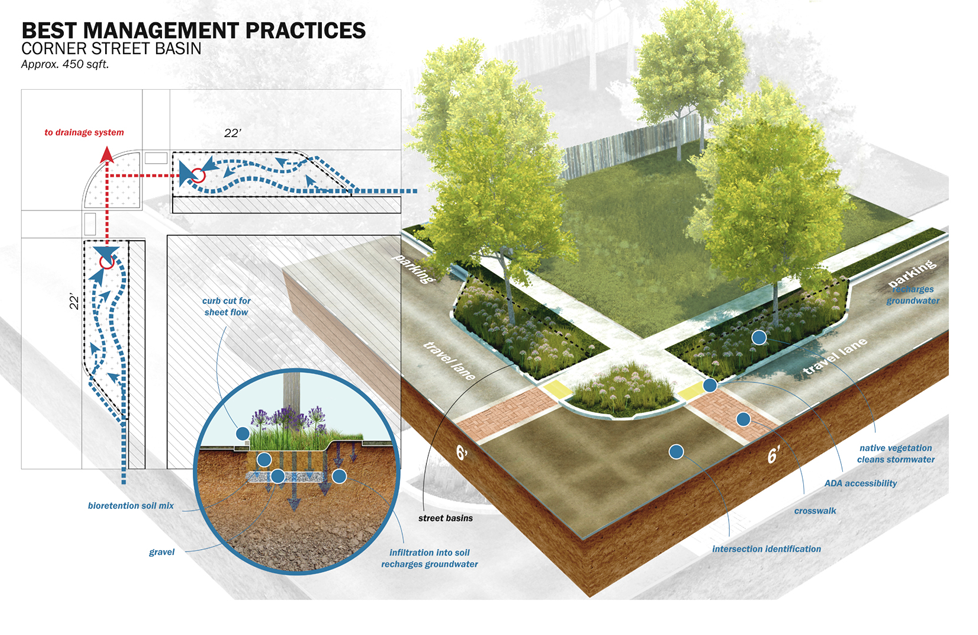
This section presents pilot project models based on three types of green infrastructure practices (green streets/alleys, green roofs, and rain gardens) and applies various considerations to help local governments choose among them. Some green infrastructure practices, such as green streets, require significant public resources and planning and can only be carried out on the government level. Other practices, such as green roofs, can also be implemented through incentivizing private actors by means of grants or subsidies. This chapter also includes local government examples of each model. Local governments can compare these models along a set of considerations to enable decision making to meet each local government’s particular situation and priorities. These considerations include both the potential benefits that green infrastructure can achieve and the community or administrative considerations that local governments may want to take into account.