

Government Operations
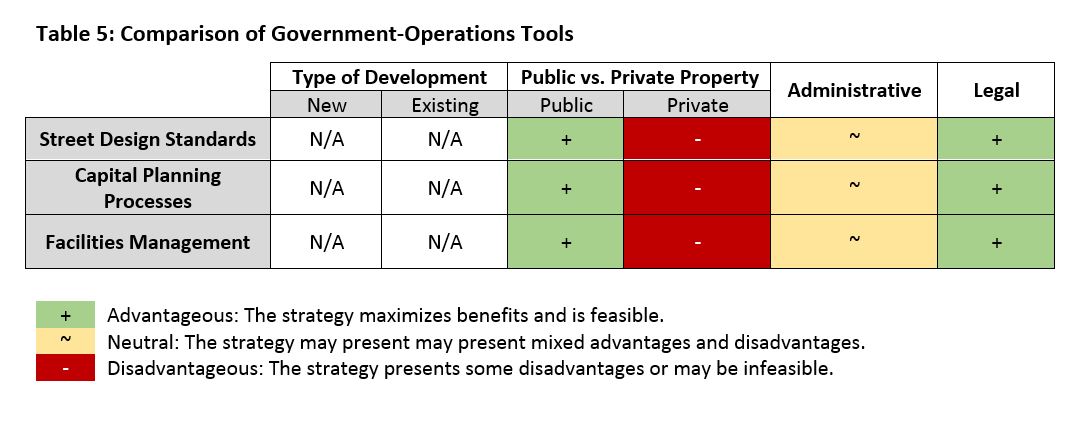
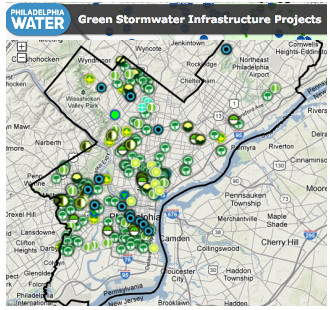 Unlike regulatory and incentive-based tools designed to influence private landowners, local governments have much greater discretion and control over municipal operations. Green infrastructure can be incorporated into processes and plans governing public land, such as street design standards governing road construction, capital planning processes guiding public investment, and facilities management governing construction of public buildings and on public land outside of the streetscape such as parks or recreational areas. By investing public dollars in green infrastructure, local governments can achieve multiple goals simultaneously, from managing stormwater to reducing temperatures and improving water quality.
Street Design Standards
Street Design Standards allow local governments to provide clear direction for employees and contractors who may be installing green infrastructure in rights-of-way along roadways. Street design standards allow green infrastructure to be built to a consistent standard, and to a standard that is well-suited for that particular locality’s soil type, traffic priorities, and drainage systems. These design standards may require time and effort to develop, and will require data from monitoring of pilot programs to ensure effectiveness.See footnote 1 Street designs that incorporate street trees should develop protocols for ongoing maintenance of trees, particularly in areas anticipating increased temperatures and/or drought.
Capital Planning Processes
Capital planning governs how local governments invest their funds in infrastructure and facilities over time. Local governments are beginning to incorporate green infrastructure into those capital plans, enabling green infrastructure to be funded by the bonds that generally support capital investments.
Facilities Management
Facilities management is the term for the methods that local governments use to guide construction of public buildings and construction on public land outside of the streetscape such as parks or recreational areas. Local governments are now incorporating green infrastructure practices into the management and retrofitting of public properties in order to manage stormwater, increase energy efficiency, and improve water quality. The most innovative local governments are strategically choosing government facilities to get the most “bang for the buck,” as in the District of Columbia’s Smart Roofs Program, and are ensuring that green infrastructure investments benefit low-income and overburdened communities within their localities.
Endnotes:
1. See Pilot chapter for examples of monitoring and data that can lead to development of standards. Back to contentBack to content
Read Previous Section Read Next Section
Back to top