

Incentive-Based Tools
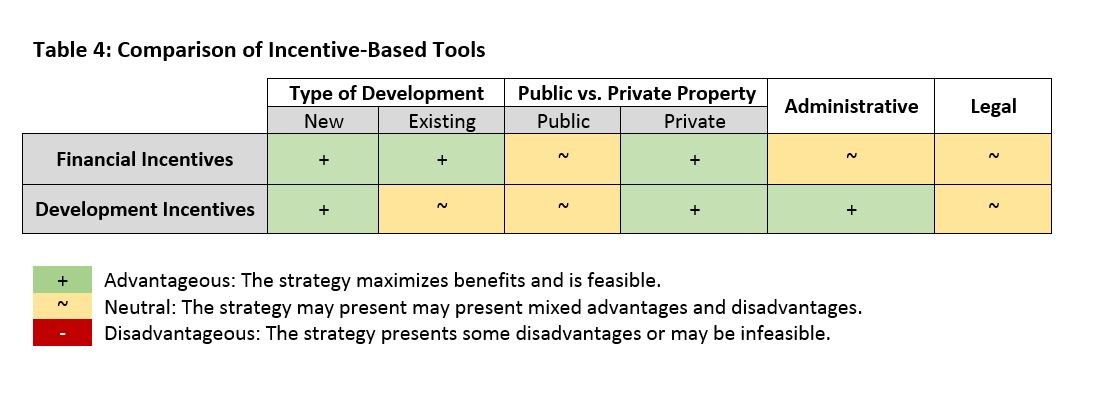
While mandates are the most certain method to change behavior, both financial and development incentives for green infrastructure can be important tools as well. Both types of incentives can stand alone or can accompany mandates; unlike mandates, incentives can influence stormwater management practices on property that is not otherwise subject to zoning or building code requirements (i.e., existing development not planned for renovation). They therefore can be a critical tool for highly-developed municipalities to spur change on private property.
Financial incentives
Financial incentives such as subsidies, grants, and rebates can make the initial capital costs needed to install green infrastructure seem less daunting to private property owners, while tax incentives can reduce costs to property owners over time. Both strategies require the local government’s having funds available, although tax incentives involve foregone revenue more than direct expenditure. Developing a financial incentive strategy may also require local governments to choose between subsidizing many properties with small amounts of money, or few properties with larger amount of money. Local governments may also want to consider whether to take a “first-come, first-serve” approach to those subsidies, or to be strategic about targeting funds to particular watersheds, neighborhoods, or land-use types that are the highest priority (for example, areas with greater urban heat islands or with high percetages of vulnerable residents). Local governments wishing to use tax incentives will need to look at their taxing authority to determine whether tax incentives are a viable option for them. City or county governments can look to the breadth of the tax authority delegated to them, and other types of governments (i.e., water utilities or regional governments) will need to assess whether they have the authority to tax at all.
Development incentives
Development incentives such as expedited permitting are likely to make a difference only for large development projects, but those projects may have the most potential for intensive green infrastructure installation, due to their higher acreage. The effectiveness of development incentives may also depend on the amount of new development happening in that jurisdiction in the first place; smaller urban areas with less development are likely to see less change from development incentives.
Read Previous Section Read Next Section
Back to top