Report: Low-Carbon Transportation Policies Can Reduce Health Care Emissions and Benefit Local Communities
February 8, 2024
 Hospitals, clinics, and other facilities that serve patients – also known as healthcare delivery organizations (or HDOs) – are pivotal players in the fight against climate change. They care for individuals impacted by climate-related health issues, and also have the potential to drive substantial change by curbing the greenhouse gas emissions that come from their own facilities and operations.
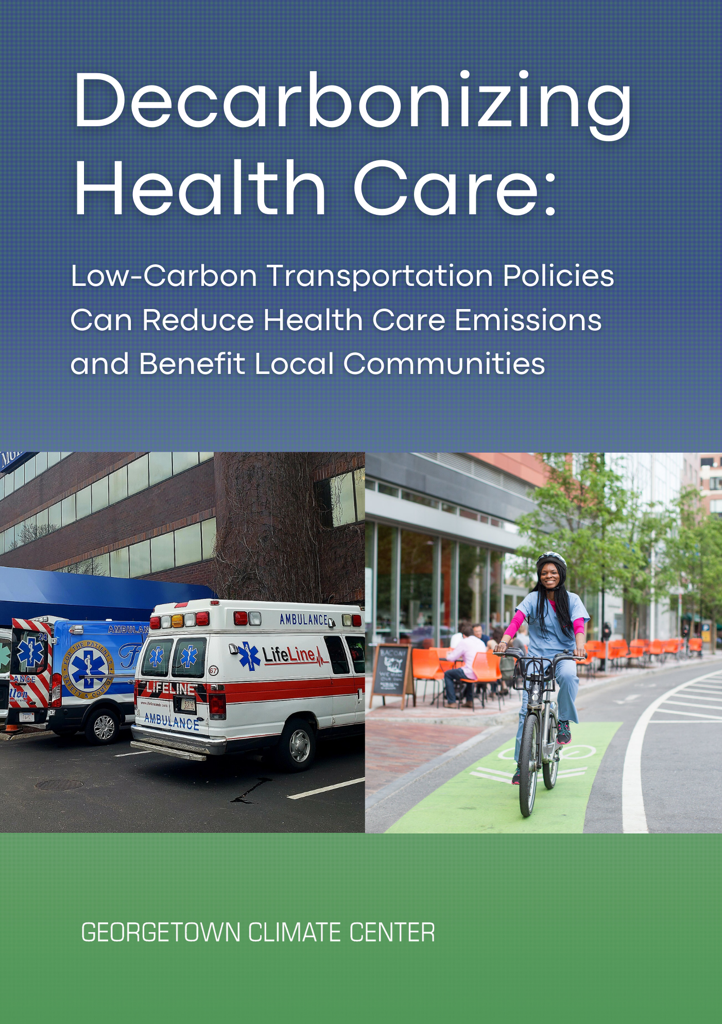
The Georgetown Climate Center today released a new report, “Decarbonizing Health Care: Low-Carbon Transportation Policies Can Reduce Health Care Emissions and Benefit Local Communities,'' the second in our series on healthcare delivery organizations' role in climate action. The paper delves into the crucial issue of transportation emissions in the healthcare sector and recommends that HDOs embrace policy solutions and take advantage of available programs to cut emissions and advance climate equity goals.
“Our analysis suggests that the low-carbon transportation policies and programs available to healthcare delivery organizations have the potential to significantly reduce their contributions to climate-warming pollution while simultaneously improving health and addressing health- and climate-equity in the communities they serve,” writes Joe Kruger, GCC’s Director of Research and Strategy and lead author of the paper.
“As in our earlier analysis of electricity emissions, we found that when HDOs provide leadership in national policy initiatives while they also work to reduce their own emissions, they have the potential to magnify their impact on the climate crisis and benefit the communities they serve.”
The new report identifies several steps HDOs can take to reduce emissions and accelerate climate progress, including:
- Reduce fleet emissions by taking advantage of financial incentives under the Inflation Reduction Act: Transitioning to zero-emissions fleet vehicles through expanded EV incentive programs and charging infrastructure can reduce emissions and lower fuel costs for rural and low-income hospitals, while “elective payment” provisions provide new opportunities for not-for-profit hospitals to benefit from clean energy tax incentives.
- Help promote broader de-carbonization within the freight vehicle sector: Trucks contribute almost 5% of overall emissions in the healthcare sector, and diesel-powered trucks emit fine particles that pose health risks to communities near medical facilities. HDOs can take advantage of initiatives like EPA's SmartWay Program, and on a broader scale, advocate for ambitious emissions reduction standards, such as those in EPA’s forthcoming regulations of greenhouse gas emissions from heavy duty trucks.
- Encourage low-emission commuting and expand telehealth options for patients: HDOs can encourage low-carbon transportation methods among employees and patients through initiatives like expanding telehealth, incentivizing public transit use and cycling, installing on-site EV charging infrastructure, and collaborating with local governments to promote sustainable transportation planning and infrastructure development.
- Provide clean and safe transportation options to local communities: Provisions in the IRA and the Bipartisan Infrastructure Law aim to bolster cleaner transportation options for underserved communities, potentially curbing pollution and enhancing healthcare access sustainably. State and local governments must prioritize these measures, and healthcare organizations can contribute expertise while participating in initiatives to monitor and improve local air quality.
This report is the second in a series on health care delivery organizations and climate action. Read the first installment here: Decarbonizing Health Care: Clean Energy Policy Options.