

About GCC's Adaptation Work
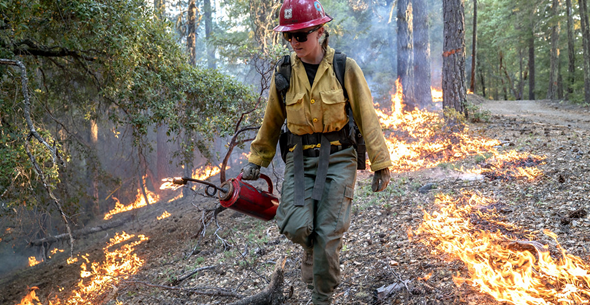
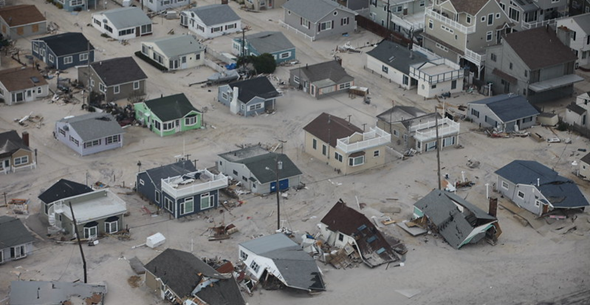
As floods, wildfires, droughts, and heat waves grow more frequent and more severe, state governments and municipal authorities are increasingly on the front lines in preparing for and dealing with the impacts of climate change. Planning for and responding to these climate driven risks requires public officials across the country to develop and implement new approaches, expertise, capacity and policy responses. The Georgetown Climate Center's Adaptation Program supports climate adaptation policymaking at every level of government through practical policy guidance, convening, and strategic implementation support, with a particular focus on responding to the growing risks of flooding, wildfire, extreme heat, and drought.
Supporting adaptation policymaking
GCC works to provide legal and policy analysis as states and communities develop and implement their adaptation plans and strategies. Examples include:
- Supporting the development of better governance structures for adaptation policy through research and analysis, and envisioning new approaches and policy options that boost resilience and adaptation.
- Analyzing federal and state programs to help policymakers invest public resources carefully, purposefully, and in ways that provide the greatest and most durable benefit to communities that need it most.
- Working to enable laws, policies, and programs that encourage smart land-use planning, minimize new development in unsafe places and help at-risk communities adapt. This includes land use, zoning, and conservation policies that reduce dangers to communities and steer development away from risky areas like special flood hazard areas and the wildland-urban interface.
Sharing effective tools, models, and resources
To foster productive public conversations about climate risk and what should be done about it, we publish original research and curate online resources that people and communities can use to understand these ideas. Each installment of our Adaptation Policy in Practice series spotlights one of the nation’s most effective state-level climate adaptation initiatives, presenting practical models for leaders building comprehensive adaptation programs. GCC also prepares and publishes toolkits on adaptation planning and implementation, and provides information on adaptation efforts at all levels of government through our State Adaptation Progress Tracker and our Adaptation Clearinghouse database. Together these tools give policymakers and advocates instant access to thousands of laws, reports, case studies, policy examples, and other resources relating to climate change impacts and adaptation.
Convening adaptation professionals to learn from experts and each other
GCC brings together practitioners from across the country both in person and virtually to share their experiences and learn from each other. Every other month, our State Policy Forum leverages the lessons from our Adaptation Policy in Practice series, hosting a focused conversation with leaders of an exemplary state adaptation initiative as a model for other states to consider. Our Regional Collaboratives Forum harnesses the power of regional collaboration on a national scale, connecting more than 35 regional climate collaboratives and networks to share strategies and learn from one another. These opportunities help states and communities learn from their peers working on similar issues, and help practitioners at all levels of government build new partnerships and collaborate more effectively.
Preparing future adaptation leaders
We also provide opportunities for Georgetown Law and Georgetown University students to gain real-world experience in the development of climate adaptation policy through legal and policy research and writing, and engagement with partner jurisdictions.
If you have questions about our work or partnering with us, please email climate@georgetown.edu.
Maryland Gov. O'Malley Signs Executive Order to Help State Prepare for Climate Change and Extreme Weather
January 2, 2013
On Dec. 28, 2012, Governor Martin O’Malley signed the "Climate Change and Coast Smart Construction Executive Order" to increase Maryland’s long term resiliency to flooding and sea-level...
Floodplain Regulation: Challenges and Opportunities in Preparing for Climate Changes (Webinar)
December 13, 2012
The Georgetown Climate Center recently hosted an important webinar about how communities can become more resilient to extreme weather and prepare for climate change through floodplain regulations. The Dec. 6 webinar...
What Actions Can Obama—And Congress— Take on Climate Change During the Next Four Years?
December 4, 2012
Sea-Level Rise and Property Rights
December 2, 2012
Peter Byrne, faculty director of the Georgetown Climate Center, dives into some of the land use, takings, and regulatory challenges facing local governments in the wake of rising sea levels in a new law review...
Vicki Arroyo's Pop Tech Talk: Lessons Learned from Extreme Storms
October 31, 2012
In the aftermath of Hurricane Sandy, attention is rightly focused on helping the families affected by the storm and repairing the damage it caused. The storm is one of the largest and most damaging to ever hit the...
Georgetown Climate Center Releases New Tool Kit to Help Local Governments Adapt to Record Heat
August 17, 2012
On the heels of the hottest month in U.S. history, the Georgetown Climate Center has released a new tool to help cities and counties better prepare for the public health and infrastructure challenges caused by rising...
How the New Flood Insurance Reauthorization and Reform Law Could Impact Adaptation Planning
August 4, 2012
Updated: August 14, 2012 The Georgetown Climate Center's Jessica Grannis today released a summary and analysis of Biggert-Waters Flood Insurance Reform Act of 2012, which includes several reforms that could assist...
Innovative Approaches to Adapting to Water Variability in the West
May 1, 2012
This brief reviews three approaches that communities are pursuing to adapt to climate change: 1) New Mexico's Active Water Resource Management program, which put rules into place that allow for temporary water use...
Hawaii Puts Climate Center's Sea-Level Rise Toolkit to Good Use
February 23, 2012
In January, Hawaii State Representative Cynthia Thielen introduced a bill to the state legislature proposing that state and county planning and permitting departments begin preparing for a 1-foot-by-2050 sea-level...
Two New Adaptation Reports Released
November 8, 2011
The Georgetown Climate Center recently released two new reports to help communities adapt to climate change. "Adaptation Tool Kit: Sea-Level Rise and Coastal Land Use" explores 18 different land use...