

In the wake of Russia's invasion of Ukraine, world oil prices spiked, from $94 per barrel the day before the invasion (February 23) to a peak of $127 per barrel on March 8, and have remained well over $100 per barrel for...June 1, 2022
Transportation
The Georgetown Climate Center works with state and federal officials and other stakeholders to help bridge any policy gaps that emerge between transportation and climate policy. The Center also assists states in forging ahead with the deployment of infrastructure for electric and clean fuel vehicles, freight efficiency planning, and transportation policies that reinforce the development and maintenance of sustainable communities.
One of the Center's biggest projects is the facilitation of the Transportation and Climate Initiative - a collaboration of 11 Northeast and Mid-Atlantic states plus the District of Columbia.
News
Issue Brief | Estimating the Greenhouse Gas Impact of Federal Infrastructure Investments in the IIJA
Executive Summary By any measure, the Infrastructure Investment and Jobs Act (IIJA),[ref title=""]Infrastructure Investment and Jobs Act, H.R. 3684, 117th Congress (2021)...December 16, 2021
News
Evaluation and Development of Regional Infrastructure for Vehicle Electrification (E-DRIVE)
The Evaluation and Development of Regional Infrastructure for Vehicle Electrification (E-DRIVE) is a user-friendly analytical tool that supports the planning of electric vehicle (EV) fast charging infrastructure...October 15, 2021
News
Regional EV Charging Infrastructure Location Identification Toolkit (ILIT)
The Regional EV Charging Infrastructure Location Identification Toolkit for the Northeast, Mid-Atlantic, and Southeast states provides resources to support state and local government planning for more equitable and informed investments in electric vehicle (EV) charging infrastructure.August 17, 2021
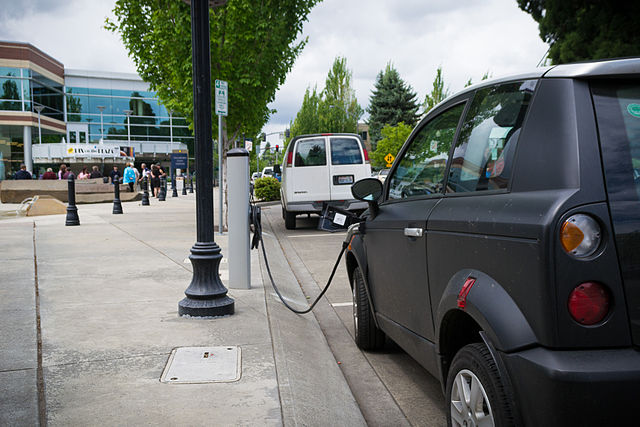
Electrifying the U.S. transportation system and achieving the 2030 national climate target will require federal investments at a transformative scale, and these investments represent a critical opportunity to reduce air pollution in overburdened communities, improve access to transportation, and create good-paying jobs.
April 30, 2021
News
The electrification of cars, trucks, and buses is an important strategy for reducing greenhouse gas emissions and other air pollution, and can lead to cleaner air and healthier communities. As federal policymakers...March 18, 2021
News
America's Zero Carbon Action Plan unveils a roadmap to eliminating GHG emissions in the U.S. by 2050
What would it take for the United States to reach zero carbon emissions by 2050? America's Zero Carbon Action Plan (ZCAP), released last week, sets out to answer that question. Building on the U.N.'s Sustainable...November 3, 2020
News
GCC's Vicki Arroyo testifies before U.S. Senate Committee on Environment and Public Works
On Wednesday, July 10, 2019, GCC Executive Director Vicki Arroyo testified before the U.S. Senate Committee on Environment and Public Works on the role of transportation in contributing to climate change and the...July 10, 2019
News
View GCC Executive Director Vicki Arroyo's full testimony to the full House Committee on Transportation and Infrastructure for a hearing entitled "Examining How Federal Infrastructure Policy Could Help Mitigate and Adapt to Climate Change." March 5, 2019
News
Transportation and Climate Initiative Listening Session Summary Report Now Available
A report summarizing the public input received at six Transportation and Climate Initiative Listening Sessions is now available.November 14, 2018
- « First Page
- 1
- 2
- 3
- 4
- 5
- 6
- 7
- 8
- Last Page »