


In the United States, responding to the climate crisis depends on effective partnerships among federal, state, and local governments. When different levels of government collaborate and communicate with each other when they are developing climate and energy policies, they can go farther and faster in achieving durable, equitable, ambitious climate action for the health and welfare of the people across the country.
Much of the historic infusion of investment in resilience, clean energy, and low-carbon transportation infrastructure made possible via the 2021 Bipartisan Infrastructure Law (BIL or IIJA) and the 2022 Inflation Reduction Act (IRA) will require implementation at the state and local level.
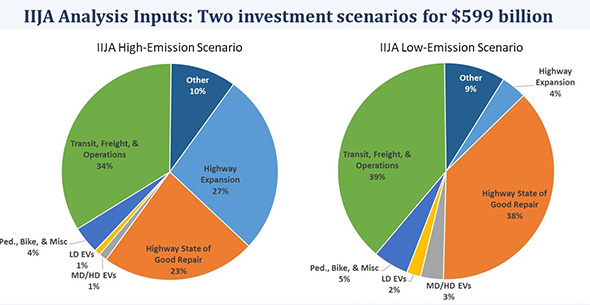
The choices states and localities make when investing federal infrastructure dollars will meaningfully affect the success of federal and state policies and programs to address greenhouse gas emissions, improve community resilience, and address equity and environmental justice. Ensuring that federal funds are spent in ways that advance GHG emission reductions or climate resilience will require significant engagement by state and local policymakers to secure the necessary results and make sure benefits and costs are shared equitably.
Georgetown Climate Center’s work on infrastructure-related policy currently focuses on four interrelated opportunities:
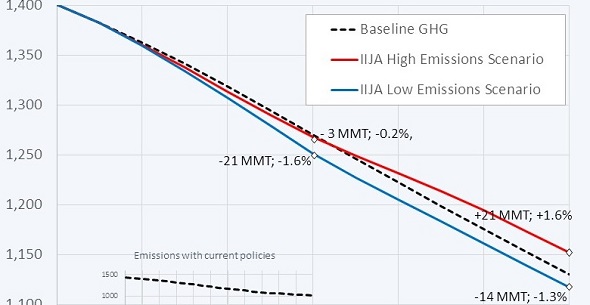
- Helping state and federal policy makers understand the connections between their use of federal infrastructure funds and near- and long-term reductions in greenhouse gas emissions;
- Identifying opportunities to harness federal investment in infrastructure to improve resilience to the effects of climate change at the state, local and national levels;
- Supporting federal and state policymakers to achieve the equity and environmental justice goals of the Justice40 initiative as they make their infrastructure investment decisions; and
- Connecting policy makers with analysis and tools to accelerate the equitable deployment of charging infrastructure for electric vehicles.
The electrification of cars, trucks, and buses is an important strategy for reducing greenhouse gas emissions and other air pollution, and can lead to cleaner air and healthier communities. As federal policymakers...
America's Zero Carbon Action Plan unveils a roadmap to eliminating GHG emissions in the U.S. by 2050
November 3, 2020
What would it take for the United States to reach zero carbon emissions by 2050? America's Zero Carbon Action Plan (ZCAP), released last week, sets out to answer that question. Building on the U.N.'s Sustainable...
GCC launches Managed Retreat Toolkit
July 15, 2020
Explore the Managed Retreat Toolkit Watch the July 29 launch webinar recording View the launch presentation slides Communities across the U.S. are facing urgent challenges from sea-level rise...
Community-Based Air Quality Monitoring
Climate and clean energy laws and programs being implemented throughout the U.S. present many opportunities to directly benefit communities that are overburdened by air pollution. The passage of the federal Inflation...