


In the United States, responding to the climate crisis depends on effective partnerships among federal, state, and local governments. When different levels of government collaborate and communicate with each other when they are developing climate and energy policies, they can go farther and faster in achieving durable, equitable, ambitious climate action for the health and welfare of the people across the country.
Much of the historic infusion of investment in resilience, clean energy, and low-carbon transportation infrastructure made possible via the 2021 Bipartisan Infrastructure Law (BIL or IIJA) and the 2022 Inflation Reduction Act (IRA) will require implementation at the state and local level.
The choices states and localities make when investing federal infrastructure dollars will meaningfully affect the success of federal and state policies and programs to address greenhouse gas emissions, improve community resilience, and address equity and environmental justice. Ensuring that federal funds are spent in ways that advance GHG emission reductions or climate resilience will require significant engagement by state and local policymakers to secure the necessary results and make sure benefits and costs are shared equitably.
Georgetown Climate Center’s work on infrastructure-related policy currently focuses on four interrelated opportunities:
- Helping state and federal policy makers understand the connections between their use of federal infrastructure funds and near- and long-term reductions in greenhouse gas emissions;
- Identifying opportunities to harness federal investment in infrastructure to improve resilience to the effects of climate change at the state, local and national levels;
- Supporting federal and state policymakers to achieve the equity and environmental justice goals of the Justice40 initiative as they make their infrastructure investment decisions; and
- Connecting policy makers with analysis and tools to accelerate the equitable deployment of charging infrastructure for electric vehicles.
BLOG | A growing number of states are taking steps to align transportation planning decisions with climate targets
January 10, 2024
New state transportation planning requirements are important tools for reducing climate pollution State governments play key roles when it comes to setting the pace for reducing greenhouse gas (GHG) emissions from...
Fourteen States & D.C. Express Support for Final Rule on Measuring GHG Emissions from Highway System
January 4, 2024
On January 4, 2024, fourteen states and the District of Columbia wrote to the Administrator of the Federal Highway Administration (FHWA) to thank the agency for adopting the [date] final rule for Assessing Performance of the National Highway System, Greenhouse Gas Emissions Measure.
State transportation officials and Georgetown Climate Center welcome final rule on tracking GHG pollution from federal highways
November 22, 2023
The Georgetown Climate Center and officials from states leading on clean transportation today welcomed a newly finalized rule from the U.S. Department of Transportation that will provide a nationally consistent framework...
Issue Brief | How Community-Based Air Quality Monitoring Can Make Climate Policy More Equitable
June 1, 2023
By James Bradbury & Emma Cross Community tour of an air quality monitoring station. (Image from Mecklenburg County) The passage of the federal Inflation Reduction Act[ref...
Report | Decreasing Flood Risk in the Midwest with Regional Collaborations
May 24, 2023
New report from GCC and Headwaters Economics: Five case studies offer lessons for local, state, and federal partnerships Every year, flooding causes billions of dollars in damage across the U.S., with devastating losses...
Image from the NJ Dept. of Transportation Transportation accounts for more than 45 percent of New Jersey’s carbon dioxide emissions, making that sector by far the largest contributor to statewide greenhouse gas...
May 24 Webinar | Decreasing Flood Risk through Regional Collaborations: Lessons from the Field
May 5, 2023
This webinar took place May 24, 2023. View the webinar recording Read the report Webinar Slides (PDF) Learn more Every year, flooding causes billions of dollars in damage across the U.S. with...
Fact Sheet: U.S. National Blueprint for Transportation Decarbonization
April 5, 2023
Fact sheet developed by GCC for state officials summarizing the U.S. National Blueprint for Transportation Decarbonization
Issue Brief: States Are in the Driver’s Seat on Transportation Carbon Pollution
March 24, 2023
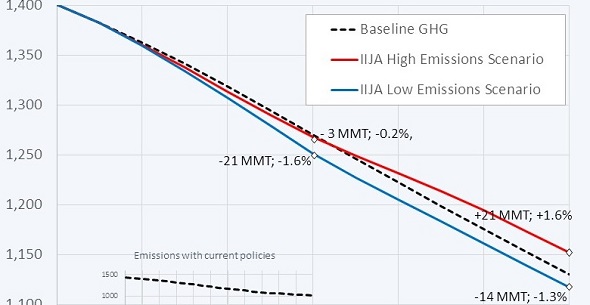
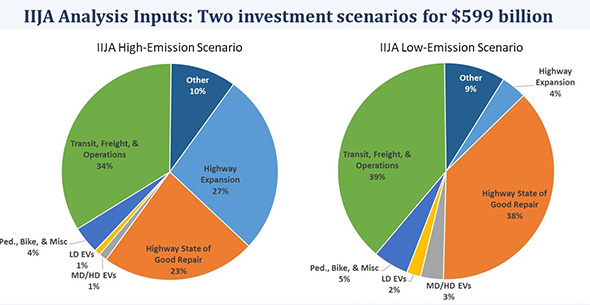
& By James Bradbury, Zack Subin, Ben Holland, and Ryan Levandowski How states spend federal funding could shift carbon pollution from transportation by as much as 5 percent, making it harder or easier to...
Issue Brief | Flexible Federal Funding Opportunities for State and Local Clean Transportation Investments
February 23, 2023
Executive Summary When it comes to deciding how to spend funds from federal transportation programs, state policymakers — including department of transportation (DOT) officials and state lawmakers — have a...