

Improving the emissions performance of our transportation system
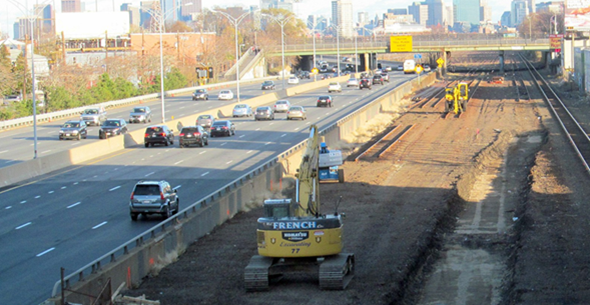
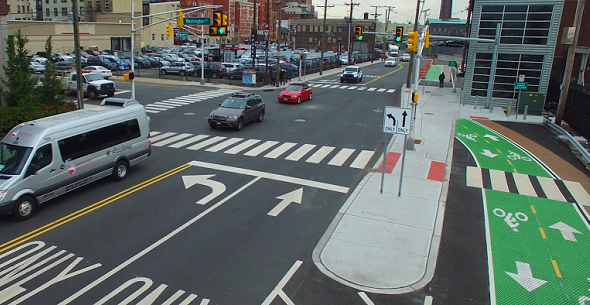
Transportation is the largest source of GHG emissions in the US, accounting for 27% of annual emissions in 2020. GCC works at the nexus of federal-state transportation policy to help inform government initiatives that leverage a broad range of strategies to reduce emissions, including light-duty and heavy-duty vehicle electrification, improved transit, and other lower-carbon, more accessible, and safer transportation options. GCC convenes multi-state and regional policymakers, supports federal and state regulatory policy development, and informs the equitable and effective implementation of state and federal legislation. GCC also supports state and federal efforts to ensure transportation investments benefit communities that have been disproportionately harmed by transportation pollution and underserved by the existing transportation system.
Informing transportation investment decisions
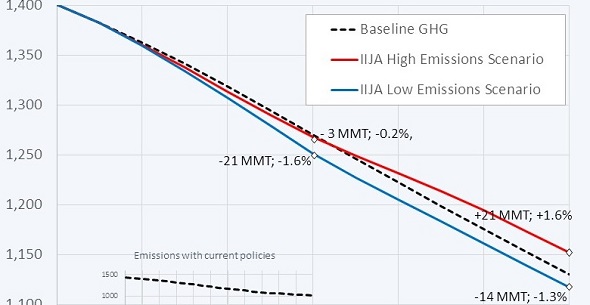
Modeling and Analysis: To inform the national conversation around how best to spend the billions of dollars in federal and state transportation funding, we analyzed the Bipartisan Infrastructure Law using our Transportation Investment Strategy Tool and assessed the potential effects of each of the bill’s surface transportation provisions on emissions outcomes at the national and state levels. We found IIJA could be an important part of the U.S. response to climate change. Or it could lead to more greenhouse gas pollution than the trajectory we are currently on. Where the actual outcome falls within that range will depend on the decisions made by state, federal, and local governments about how to spend the money made available by IIJA.
We partnered with Cambridge Systematics to develop a free online tool – the Transportation Evaluation and Carbon Reduction Tool (TEA-CART) – to help practitioners in state and local departments of transportation quickly assess how investments in their capital plans could affect the future emissions performance of the transportation system.
Legal analysis on flexibility of funding: States have considerable flexibility in how to invest federal transportation funds, and we are providing legal and policy analysis to help state and federal policymakers and stakeholders determine how funds can best be directed toward projects that reduce climate-warming pollution.
Accelerating vehicle electrification
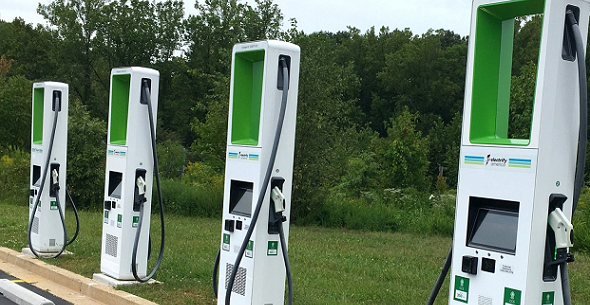
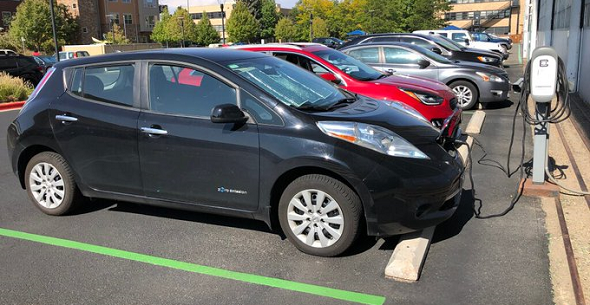
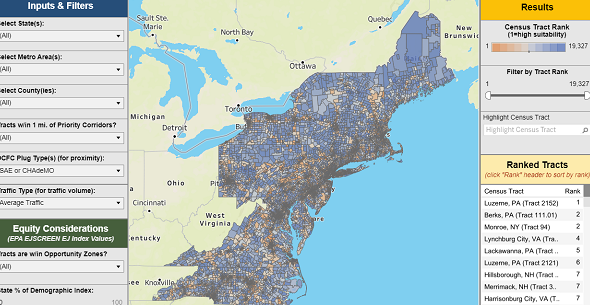
Electric vehicles (EVs) have enormous potential to reduce harmful air pollution and greenhouse gas (GHG) emissions from transportation. GCC has developed legal and policy analysis to inform state and federal investments in EV charging infrastructure, along with mapping and analysis tools to inform discussions between policymakers, local communities, and other stakeholders in considering priority locations for EV fast charging infrastructure investments, including the places most affected by pollution and underserved by existing transportation systems.
Convening states to focus on the GHG performance of federal highways
GCC conducts analysis and convenes states and other stakeholders from across the nation to support the development of federal transportation programs and regulations, with a focus on the performance of the federal highway system. GCC works to inform federal policy with the perspectives and lessons learned from states, including by publishing white papers and policy analyses and facilitating multi-state comment letters.
Expanding community-level air quality monitoring
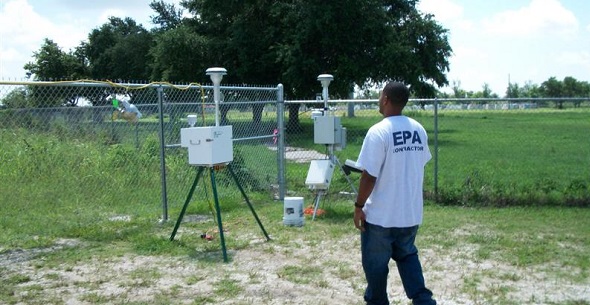
Community and environmental justice advocates have long called for more air quality monitoring in their neighborhoods, and a growing number of political leaders at the federal, state, and local levels of government are now taking responsive actions. To help state agencies respond to community needs, expand community-level air monitoring programs, and achieve the equity and environmental justice goals of their air quality, climate, and clean energy programs, GCC facilitates the Air Quality Monitoring Workgroup (AQMWG). This community of practice among state agency officials in the Northeast and Mid-Atlantic region shares information and best practices regarding community-based air quality monitoring and related policy actions.
Facilitating Northeast and Mid-Atlantic state collaboration
GCC serves as the facilitator and convenor of state transportation, energy, and environment agencies from the Northeast and Mid-Atlantic region working to develop low-carbon transportation policies. This work includes multi-state efforts to consider GHG emissions in transportation investment planning processes, coordinate and support regional electric vehicle (EV) charging infrastructure deployment, build state and local capacity for air quality monitoring, and develop regional low-carbon transportation policies.
Siting and Design Guidelines for Electric Vehicle Supply Equipment
December 17, 2012
These guidelines identify key siting and design issues that are relevant to local governments, developers, homeowners, businesses, utility providers, and other organizations. The guidelines provide an overview of elements of site selection and design and installation scenarios, including considerations for commercial lots, multi-family residences, on-street charging, service station models, and fleets.
EV Ready Codes for the Built Environment
December 17, 2012
This document provides an overview of building and electrical codes and their relation to EVs, highlights best practices from around the country, and makes recommendations for jurisdictions in the Northeast and Mid-Atlantic.
State-Level Programs and Policies Supporting Sustainable Communities within Transportation and Climate Initiative Jurisdictions
November 30, 2012
This analysis presents an overview of what Transportation and Climate Initiative jurisdictions are doing to achieve sustainable communities outcomes, how their legal frameworks govern land use and transportation policies, and notable programs or policies from a sustainable communities perspective.
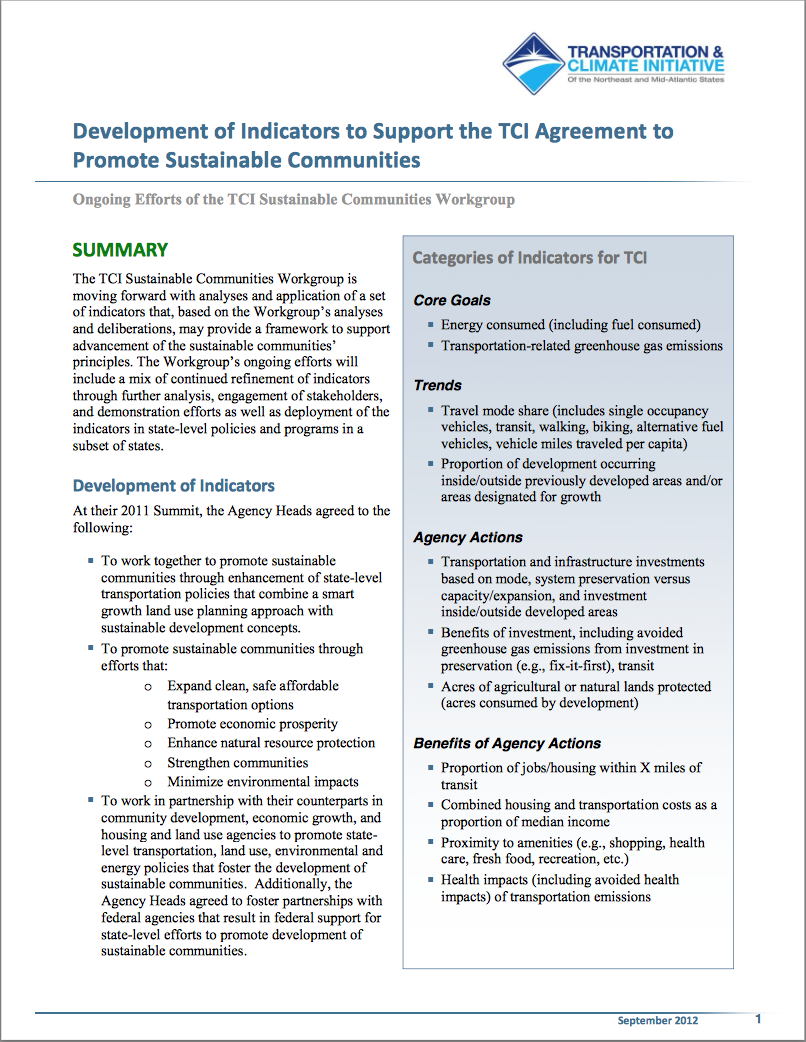
TCI's Work on Sustainable Transportation Indicators
September 20, 2012
The TCI Sustainable Communities workgroup is exploring ways to measure the environmental and economic benefits of state-level sustainable communities efforts. By working together as a region, TCI is helping to leverage state resources and foster sharing of states' experiences with sustainable transportation policies by providing standardized tools to measure outcomes in the same way.
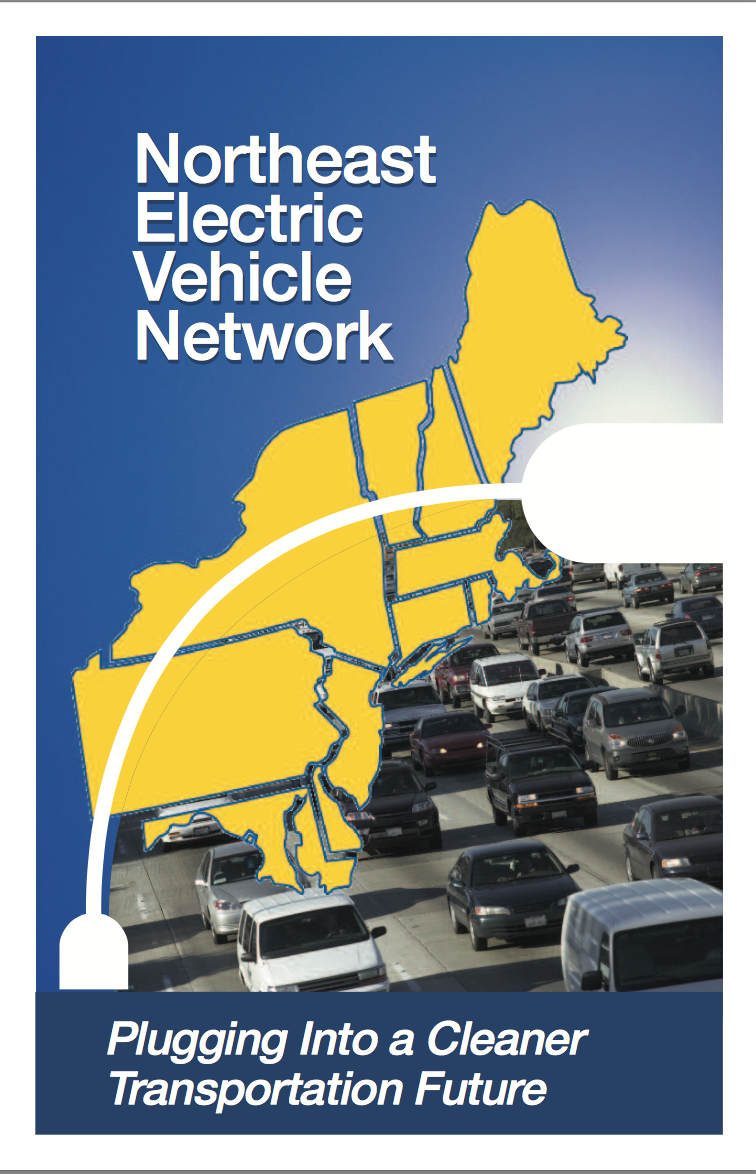
Northeast Electric Vehicle Network Brochure
September 12, 2012
This brochure describes the Northeast Electric Vehicle Network, including the vision behind it, the benefits created by the Network, and the immediate action plan for the 12 participating jurisdictions throughout the northeastern United States. The Northeast Electric Vehicle network is a project of the Transportation and Climate Initiative.
Legislative Analysis: Climate Related Provisions of the Federal Transportation Reauthorization: MAP-21
September 7, 2012
The Georgetown Climate Center has produced a summary of the federal transportation reauthorization legislation, "Moving Ahead for Progress in the 21st Century Act" (MAP-21), which became law in July 2012. This document identifies provisions of the Act that relate to efforts to reduce greenhouse gas emissions or adapt to climate change.
TCI Releases Report on the Status of Electric Vehicles in the Northeast
September 7, 2012
The Transportation and Climate Initiative has released a market overview and literature review that provides an overview of plug-in electric vehicle (PEV) deployment in the Northeast and Mid-Atlantic states.
The report assesses current electric vehicle and electric vehicle charging station technology, looks at the state of PEV markets, reviews the benefits of PEV deployment, and identifies the barriers and challenges to PEVs in gaining market acceptance. The document is intended to serve as a resource for consumers and policy makers who seek to better understand the nature of and challenges facing electric vehicle deployment in the TCI region.
Plug-In Electric Vehicle Deployment in the Northeast
September 7, 2012
The Transportation and Climate Initiative released a market overview and literature review today that provides an overview of plug-in electric vehicle (PEV) deployment in the Northeast and Mid-Atlantic states.
Analysis of Freight in the Northeastern U.S.
March 27, 2012
On behalf of the Transportation and Climate Initiative, Dr. James Winebrake recently conducted an analysis of all freight moving through the northeastern United States.
Summary of Senate Transportation Bill
March 16, 2012
This document summarizes the Senate transportation reauthorization bill, Moving Ahead for Progress in the 21st Century Act (S. 1813, “MAP-21”). MAP-21 authorizes $109 billion for surface transportation programs for two years, an extension of current aggregated funding levels through fiscal year (FY) 2013.
In the wake of Russia's invasion of Ukraine, world oil prices spiked, from $94 per barrel the day before the invasion (February 23) to a peak of $127 per barrel on March 8, and have remained well over $100 per barrel for...
Issue Brief | Estimating the Greenhouse Gas Impact of Federal Infrastructure Investments in the IIJA
December 16, 2021
Executive Summary By any measure, the Infrastructure Investment and Jobs Act (IIJA),[ref title=""]Infrastructure Investment and Jobs Act, H.R. 3684, 117th Congress (2021)...
Evaluation and Development of Regional Infrastructure for Vehicle Electrification (E-DRIVE)
October 15, 2021
The Evaluation and Development of Regional Infrastructure for Vehicle Electrification (E-DRIVE) is a user-friendly analytical tool that supports the planning of electric vehicle (EV) fast charging infrastructure...
Regional EV Charging Infrastructure Location Identification Toolkit (ILIT)
August 17, 2021
The Regional EV Charging Infrastructure Location Identification Toolkit for the Northeast, Mid-Atlantic, and Southeast states provides resources to support state and local government planning for more equitable and informed investments in electric vehicle (EV) charging infrastructure.
To Achieve National Climate and Equity Goals, Federal Electric Vehicle Investments Must Match the Scale of the Opportunity
April 30, 2021
Electrifying the U.S. transportation system and achieving the 2030 national climate target will require federal investments at a transformative scale, and these investments represent a critical opportunity to reduce air pollution in overburdened communities, improve access to transportation, and create good-paying jobs.
The electrification of cars, trucks, and buses is an important strategy for reducing greenhouse gas emissions and other air pollution, and can lead to cleaner air and healthier communities. As federal policymakers...
America's Zero Carbon Action Plan unveils a roadmap to eliminating GHG emissions in the U.S. by 2050
November 3, 2020
What would it take for the United States to reach zero carbon emissions by 2050? America's Zero Carbon Action Plan (ZCAP), released last week, sets out to answer that question. Building on the U.N.'s Sustainable...
GCC's Vicki Arroyo testifies before U.S. Senate Committee on Environment and Public Works
July 10, 2019
On Wednesday, July 10, 2019, GCC Executive Director Vicki Arroyo testified before the U.S. Senate Committee on Environment and Public Works on the role of transportation in contributing to climate change and the...
GCC Exec. Director Vicki Arroyo testifies before House Committee on Transportation and Infrastructure
March 5, 2019
View GCC Executive Director Vicki Arroyo's full testimony to the full House Committee on Transportation and Infrastructure for a hearing entitled "Examining How Federal Infrastructure Policy Could Help Mitigate and Adapt to Climate Change."
Transportation and Climate Initiative Listening Session Summary Report Now Available
November 14, 2018
A report summarizing the public input received at six Transportation and Climate Initiative Listening Sessions is now available.
- « First Page
- 1
- 2
- 3
- 4
- 5
- 6
- 7
- 8
- Last Page »